
“HAPPINES IS WALKING BAREFOOT THROUGH GRASS”.

Charlie Brown, in Charles M. Schulz, Peanuts, 1950

 Mi chiamo Barbara, ho 36 anni e sono tetraplegica dal 1987, quando, in seguito ad una caduta dall’altalena, ho subito una lesione cervicale del midollo spinale che mi ha compromesso l’uso totale dei quattro arti. Mi ritengo una “Cure Girl” perché desidero con tutto il cuore che si trovi presto una cura per tutti i tipi di lesione spinale e per tutti i livelli. Ma, in modo particolare, per tutte quelle lesioni che comportano la perdita totale e/o parziale dell’autonomia nel gestire la propria persona.
La gravità della mia lesione e il suo alto livello (C4-C5) ha determinato una condizione di dipendenza per lo svolgimento delle azioni necessarie al vivere quotidiano, causando grandi disagi non solo a me. Essere dipendente dagli altri è una delle cose peggiori che l’essere umano può sperimentare. Tutto questo è aggravato dal fatto che, nella maggior parte dei casi, sono i familiari a prendersi tutto il carico dell’assistenza. Perciò, solo una cura definitiva al fine di recuperare almeno tutti quei movimenti che permettono la totale autonomia è l’unica soluzione per cambiare le cose; ogni altro rimedio è solo un palliativo.
L’attenzione sulla ricerca medica per la cura delle lesioni spinali è pressoché inesistente, soprattutto in Italia; e questo accade perché inesistente è l’informazione sulle conseguenze che questo tipo di trauma comporta… come se non bastasse l’immobilità di per sé ad esigere che una cura venga trovata al più presto!
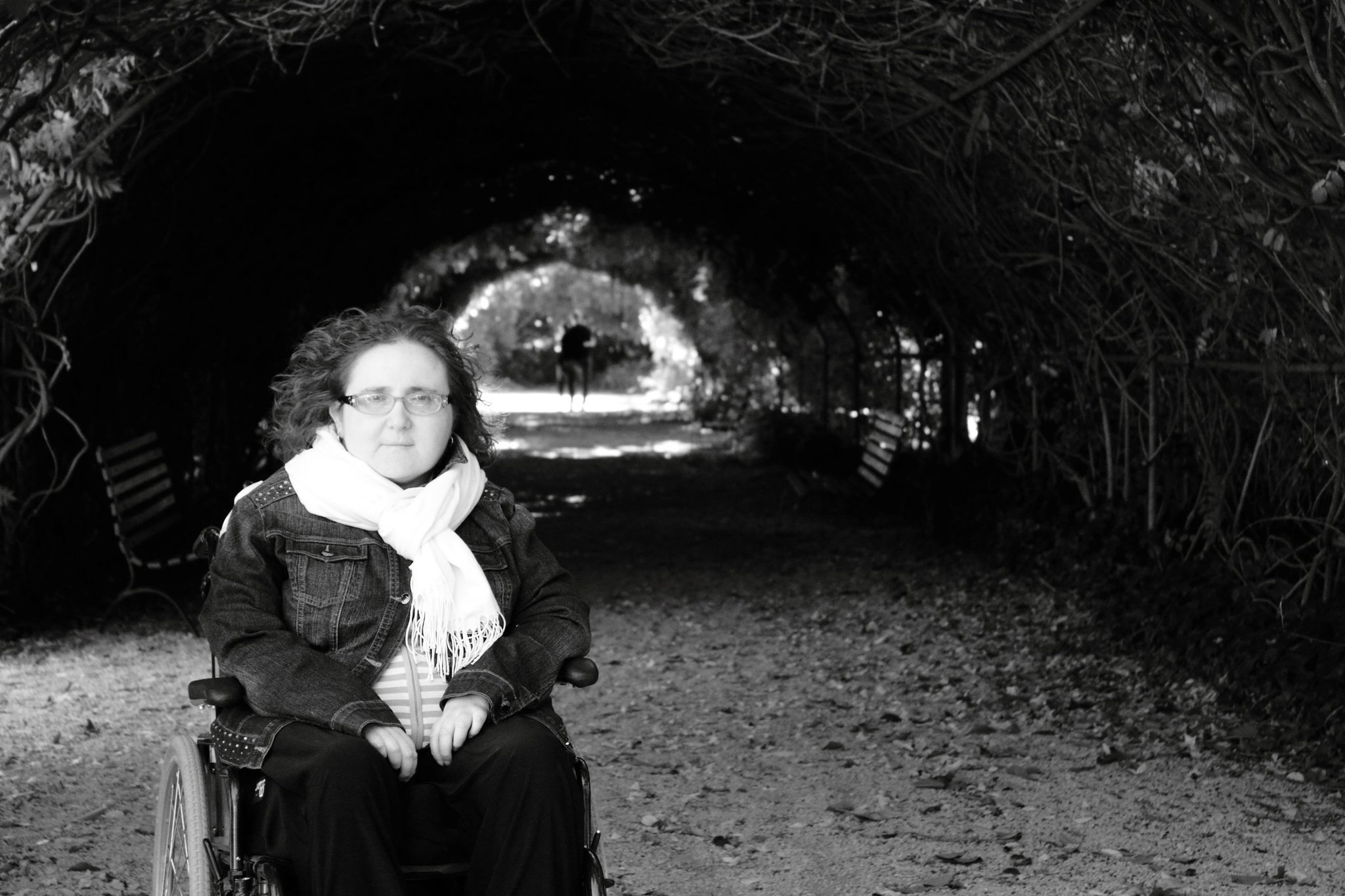 Grazie ad Internet possiamo diffondere la nostra voce e far conoscere a tutti cos’è effettivamente una lesione spinale, così tutti si renderanno conto di quanto è importante tenere sempre accesi i riflettori sulla ricerca medica, come avviene per tante altre malattie invalidanti.
“La felicità è… sentire i capelli fra le dita… prendere in braccio un bambino… applaudire a un concerto… tenere fra le mani una tazza di latte caldo… camminare a piedi nudi sulla sabbia bagnata…
Basta poco per essere felici.”
La Vostra Cure Girl Barbara
My name is Barbara, I’m 36 years old and I’m quadriplegic since 1987, when, following a fall from my swing, I suffered a cervical spinal cord injury that has affected me the full use of my arms and legs. I consider myself a “Cure Girl” because I wish with all my heart that a cure will be found soon for all types of spinal cord injury and for all levels. In particular, for all those injuries that cause the total and/or partial loss of autonomy in taking care of themselves.
The severity of my injury and its high level (C4-C5) resulted in a condition of dependence to perform the actions necessary to daily life, causing great inconvenience not only to me. Being dependent on others is one of the worst things that a human being can experience. All this is aggravated by the fact that, in most cases, family has to take the whole load of assistance. Therefore, only permanent cure to recover at least all those movements that allow complete autonomy is the only way to change things; every other remedy is only a palliative.
The focus on medical research to cure spinal cord injuries is very lacking, especially in Italy, and this is because there is a very little information on the consequences which this type of trauma involves… as if paralysis itself is not enough to require the need of a cure!
Thanks to Internet we can spread our voice and let everyone know what is actually a spinal injury, so everyone will realize how important it is to always keep the spotlight on medical research, as it occurs with many other disabilities.
“Happiness is… feel the hair through your fingers… take a child in your arms… clapping at a concert… hold in your hands a cup of hot milk… walking barefoot on wet sand…
It does not take much to be happy.”
Our Cure Girl Barbara

A good news for Chronic Spinal Cord Injury (SCI) cure is coming from Stem Cells Inc.
“StemCells, Inc.(Nasdaq:STEM) today announced that the twelve month data from the first patient cohort in the Company’s Phase I/II clinical trial of its proprietary HuCNS-SC® product candidate (purified human neural stem cells) for chronic spinal cord injury continued to demonstrate a favorable safety profile, and showed that the considerable gains in sensory function observed in two of the three patients at the six-month assessment have persisted.”(1)
This is a first step but it is showing all of us that our dreams for a cure may become a reality!
“While we need to be cautious when interpreting data from a small, uncontrolled trial, to our knowledge, this is the first time a patient with a complete spinal cord injury has been converted to a patient with an incomplete injury following transplantation of neural stem cells. We are encouraged that the cells appear to convey clinical benefit in such severely injured patients.” (2)
Una buona notizia per la cura delle Lesioni Spinali Croniche arriva da Stem Cells Inc.
“Stem Cells Inc. ha annunciato oggi che ad un anno dal completamento del primo gruppo di pazienti, con lesione cronica completa del midollo spinale, sottoposti al trapianto di cellule staminali, le cellule in questione hanno continuato a mostrare un ottimo profilo di sicurezza. E’ stato inoltre osservato dopo sei mesi un aumento della funzione sensoriale in due dei tre pazienti del primo gruppo trapiantato, sensibilità che è stata preservata dopo un anno dall’osservazione. Il terzo paziente è rimasto stabile.”(1)
Questo è solo un primo passo ma ci dimostra che i nostri sogni di una cura potrebbero diventare una realtà!
“Mentre c’è necessità di essere cauti in questa fase nell’interpretare i dati provenienti da un piccolo gruppo di pazienti trattati, è altresì notevole riscontrare per la prima volta che un paziente passi da una lesione spinale cronica completa ad una lesione spinale incompleta dopo trapianto di cellule staminali neurali. Siamo molto incoraggiati dal fatto che le cellule sembrano trasmettere beneficio clinico a questi pazienti con questa grave lesione spinale.” (2)
 “I still feel your touch in my dreams. Forgive me my weakness, but I don’t know why. Without you it’s hard to survive.”
Cascada – Everytime We Touch (2006) http://www.youtube.com/watch?v=gWB-J0EEFac
 Google Trend says Google users searched for “spinal cord injury” more than ever before or after in October 2004 when Superman, Christopher Reeve, passed away due to complications from his high cervical spinal cord injury.
“It then was in October 2004 that our movement lost its most recognizable face, and our most passionate advocate for a cure. Since then, as technical traders say about a stock chart, the trend is from the “upper left to the lower right. People are searching less and less for the term “spinal cord injury”.”
This is something of a worry. And something that brings a great sadness to me and many others I’m sure. How many of us are in this world who before 2004 and since then have suffered a spinal cord injury and who are searching for a cure, hoping that soon we’ll see a way to have us all back on our feet again.
This trend is bad for all of us. We need to get out there and raise awareness that spinal cord injury doesn’t mean an end to your life. But it also doesn’t mean that you loose hope for a cure. One day this will happen and if we all keep spreading the word, talking to as many people who will listen about our cause then one day this will come.
Just a month before my own accident Christopher Reeve also had a riding accident which left him with considerably more paralysis. But he didn’t give up. He and his wife spent their life time trying to raise money for spinal research.
The cure unfortunately didn’t come soon enough for Christopher but we all need to continue to support research and find the cure for Chronic Spinal Cord Injury.
Being Cure Girls we are trying to spread awareness and show people all over the world that a cure for Chronic Spinal Cord Injury is still something vitally important. This is something we all believe in and we know will one day become reality, if we just keep on fighting. Never giving up.
Therefore when people do searches now, it should trend up and up and up to the right. Because the Cure Girls are now raising awareness and raising funds for spinal research, this is not the end, it’s the beginning. This is something new, but it is something we are building on.
“We were all born to walk not to roll”.
Cure Girl Rebecca.
Read more about it: http://www.scisucks.org/content/what-does-google-trends-tell-us-about-spinal-cord-injury
 Andremo oltre i limiti e confini liberi vedrai
faremo cose che non hai osato immaginare mai
andiamo…
Via senza più problemi andiamo
via senza regole
Godersi giorno dopo giorno
ogni momento che verrà
sarà diverso mai più tempo perso
aspettando che la vita va …
Raf – Via (2001) http://www.youtube.com/watch?v=Q_M4C3Sn-Zc
“Tornassi indietro vorrei la vita esattamente come è stata incidente compreso… La felicità è desiderare esattamente ciò che si ha.”
Questa frase è stata utilizzata più volte per sponsorizzare la vendita del libro da lui scritto.
Mi sento con tutta onestà presa in giro e reputo questa dichiarazione controproducente per la ricerca di una cura delle lesioni spinali, in quanto falsifica la sofferenza quotidiana di coloro che vivono ogni giorno con le gravi conseguenze che la lesione al midollo spinale comporta.
GRAZIE A TUTTI QUELLI CHE SI DIMOSTRERANNO SENSIBILI E CI AIUTERANNO IN QUESTA BATTAGLIA PER LA CONQUISTA DELLA CURA E DELLA NOSTRA VERA VITA INDIPENDENTE!
ON A MISSION TO REVERSE PARALYSIS - CHRONIC SPINAL CORD INJURY MUST BECOME CURABLE
It's finally here . . . the 7th annual gathering of Cure Warriors.
The Report For The Seriously Dedicated Community Interested In Research and Science for Patients (not projects) To Treat or Cure Chronic SCI Paralysis
ON A MISSION TO REVERSE PARALYSIS - CHRONIC SPINAL CORD INJURY MUST BECOME CURABLE
 CURE GIRLS