Cure Girl Barbara: “La mia (in)evitabile Lesione”!

Altalena

Ventisei anni fa la mia vita cambiava per sempre. Una caduta dalla mia altalena mi ha lasciato paralizzata dalle spalle in giù.

Ho subito una lesione spinale tra la quarta e la quinta vertebra cervicali in seguito a un colpo di frusta nell’impatto col terreno. Ciò ha causato lo slittamento delle vertebre che hanno lesionato il midollo. È successo perché avevo il torcicollo miogeno, una patologia congenita.

Prima dell’estate del 1987 stavo facendo delle visite per cercare di risolvere il mio problema. I dottori che mi hanno vista confermarono la necessità di intervenire chirurgicamente, ma nessuno di loro mi informò sui rischi che potevo correre con le mie vertebre che non erano nella loro naturale posizione. In particolare ricordo un radiologo piuttosto preoccupato davanti alle lastre del mio collo… Ma non mi disse nulla.

Poi, ironia della sorte, l’ortopedico che avrebbe dovuto operarmi decise di rimandare l’intervento dopo l’estate…Il 13 agosto caddi dall’altalena.

Se solo fossi stata messa al corrente della gravità della situazione, dei rischi che questa avrebbe potuto comportare, e se avessi indossato un collare quel terribile giorno… Beh, non posso esserne certa, ma forse la lesione non ci sarebbe stata.

E ora sono una donna di 37 anni che non è padrona del proprio corpo e totalmente dipendente dagli altri per tutte le azioni della vita quotidiana. Sono rimasta anche con tante domande senza risposta riguardo la condizione del mio collo prima della lesione.

Ma adesso voglio lottare per una CURA per le Lesioni Spinali Croniche.

Bisogna divulgare il messaggio dell’urgenza di trovare una CURA o una combinazione di terapie. Tutto questo non è così lontano, ma si DEVE AGIRE ORA per accelerare il lavoro dei ricercatori, affinché trovino la soluzione o le soluzioni per rendere reversibile la paralisi in tutti i tipi e i livelli di Lesione Spinale.

La Vostra Cure Girl Barbara

Cure Girl Barbara: “My (in)evitable Injury”!

Altalena

Twenty six years ago my life changed forever. A fall from a swing left me paralysed from the shoulders down. My spinal cord was injured between the 4th and 5th vertebrae following a whiplash just after the bump on the ground. This caused the slip of the vertebrae which injured my spinal cord. It happened as a result of being born with a stiff neck, ie my neck was crooked.

In the late spring of 1987 I was going for appointments with doctors to try to solve my problem. I was told that I needed surgery to remove my malformation, but none of them informed me about the risk of my vertebrae not being in their ‘natural position’. In particular I remember seeing a radiologist’s expression on their face while looking at the x-rays of my neck. He looked extremely worried but did not inform me of the dangers. It’s ironic that the surgeon preferred to operate on me AFTER the summer… my fall was on August 13th, 1987.

If only I knew the seriousness of my problem, the risks I could run and even if I had worn an orthopedic collar on that terrible day… well, I can’t be sure but it may even be prevented.

Now I’m a 37 year old woman who has lost the control of her body and completely dependent on others for all actions of her daily life. I’m also left with many unanswered questions regarding my neck before my injury.

I want to FIGHT now for a CURE for Chronic Spinal Cord Injury. We have to spread the message of urgency… a  CURE or a combination of therapies is not so far away but actions can be taken now to accelerate the researchers jobs.

It’s imperative that we FIND a CURE so that everyone, of all kinds/levels of Spinal Cord Injuries are eligible.

 Cure Girl Barbara

“L’abito fa la ragazza” (Parte 1)

Vetrine

A volte, quando vedo dei bei vestiti dentro le vetrine, non posso fare a meno di pensare a come mi sarebbero stati bene addosso se fossi ancora in grado di camminare.

Dopo sette anni passati con una lesione spinale, questa sensazione non è così forte come all’inizio, ma ci sono ancora giorni in cui quei pensieri tornano e non sono sempre facili da affrontare.

E no: Non riesco a stare lontana dal centro commerciale!

Non è facile comprare vestiti belli e di qualità quando si è seduti su una sedia a rotelle. Per dirla tutta; si è costretti a cambiare completamente il proprio “stile” e non sarà mai più come prima, credo.

A volte, siamo costretti ad indossare cose che non hanno nulla di affascinante e dobbiamo farlo per problemi riconducibili alla perdita d’equilibrio (es: busti) o per mantenere la nostra pressione sanguigna sotto controllo (es:calze elastiche).

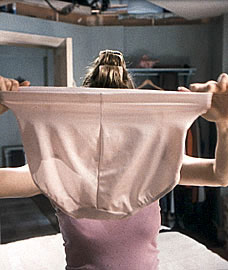
Cose che nella normalità non avremmo indossato nemmeno una volta raggiunta l’età della pensione. Per dirla con le parole della Cure Girl Lolly: “Se hai una lesione spinale a volte sei costretta ad indossare cose che non metteresti nemmeno da morta”!

mutandoni_di_Bridget_Jones

Ci sono un sacco di ragioni che ci impediscono di comprare quello che ci piacerebbe davvero indossare.

Gli abiti devono essere elasticizzati, perché non siamo in grado di stare in piedi e quindi “tiriamo su” tutto.

Per le strade probabilmente avrete visto molte ragazze avvolte in abiti pomposi. Sono belli, ma se non si fa attenzione, l’abito si incastrerà subito nelle ruote.

E che dire della dimensione di magliette e top? Non è sempre possibile acquistarle della giusta taglia, perché le tue braccia si possono essere troppo sviluppate a causa del continuo spingersi ogni giorno.

Vi è un punto molto importante che voglio condividere con tutti voi: abbiamo sempre bisogno di essere sicuri che i nostri vestiti non ci provochino piaghe da decubito, perché non vogliamo passare la maggior parte del nostro tempo a letto in attesa che le ferite guariscano.

Ecco perché ho tagliato le tasche dei miei jeans nuovi, prima di indossarli. Un semplice arrossamento può diventare facilmente una terribile piaga. In questo momento una delle Cure Girl ha una piaga in fase di guarigione, penso che questa sia una delle peggiori complicazioni causate dalla lesione del midollo spinale.

Sono “contenta” che i Leggings vadano ancora di moda, soprattutto abbinati con un mini abito. Credo sia il miglior articolo di abbigliamento per le ragazze con una lesione del midollo spinale, almeno fino a quando non se ne indossano un paio di color bianco 😦

To be continued

Cure Girl Maaike

Cure Girls: “Actions, not just words!”


Actions, not just words
 
 
Hey Everyone,
 
lots of VERY exciting things planned for us in the next few months ahead.Cure Girl Rebecca will be competing in the last part of the Jersey marathon in October and raising all funds for Unite 2 Fight Paralysis.Italian Cure Girls will be organising Ride For Life 2013 in Italy [ Pista South Milano di Ottobiano (PV) ] .

Cure Girl Ruth has also something yet to be revealed!!!!

Cure Girl Lolly will be visiting the Miami Project later in the year to discuss CURE with the researchers and also planning a Charity Cabaret Gala in London with her dear friend Mark raising all money for Spinal Research.

We will be releasing specific dates/sponsorship details ASAP.

Keep spreading the love and sharing our Cure Girls FB Fan Page to let everyone know OUR and YOUR mission TO MAKE CHRONIC SPINAL CORD INJURY CURABLE.

Have a great day all!!!!! 

Love from the CURE GIRLS X


Cure Girls: “Fatti, non solo parole!”

Actions, not just words
Ciao a tutti,
un sacco di cose interessanti bollono in pentola per i mesi a venire.
La nostra Cure Girl Rebecca parteciperà alla Jersey marathon in Ottobre e raccoglierà fondi per Unite 2 Fight Paralysis.
Mentre le Cure Girls Italiane sono impegnate a dare una mano con l’organizzazione ed il supporto della manifestazione italiana Ride For Life 2013  che si terrà il 16 e il 17 novembre presso la Pista South Milano di Ottobiano (PV) .
Anche la nostra Cure Girl Ruth sta progettando qualcosa!La Cure Girl Lolly invece visiterà nuovamente il  Miami Project per continuare a tenerci aggiornati sulle loro ricerche ed  inoltre sta pianificando, a Londra, uno spettacolo Cabaret benefico il cui ricavato sarà donato a Spinal Research.

E vi assicuriamo che non finisce qui!

Presto vi aggiorneremo fornendovi date e maggiori dettagli!

Continuate a sostenerci nella nostra lotta e condividere  i nostri blog  e la Cure Girls FB Fan Page per far conoscere a tutti la nostra e la vostra missione : LA LESIONE SPINALE CRONICA DEVE DIVENTARE CURABILE!

Con affetto

CURE GIRLS

The realities of spinal cord injury are far more complex than just “not walking”.

The realities of Spinal Cord Injury are far more complex than just not walking. When someone becomes paralysed, they are unable to coordinate the complex signals needed up and down the spinal cord to undertake urination. The bladder becomes paralysed and individuals with SCI are often unable to tell when they need to urinate and almost all paralysed people are unable to go to the bathroom without the use of catheters, other pieces of equipment and extensive use of pharmaceuticals to assist with bladder spasms.

bladders/catheterisationAny form of catheterisation causes significant health problems for paralysed individuals as it enables the introduction of microscopic bacteria directly into the bladder, resulting in complex urinary tract infections (UTIs). In paralysed individuals, UTIs cause a significant increase in painful spasms and spasticity all over the body but also in the bladder itself, causing leakage of urine. UTIs are often accompanied by fever, chills and debilitating fatigue, all of which severely impact the paralysed individual’s ability to lead an independent and fulfilling life. Untreated, UTIs can lead to further medical complications, hospitalisation and even death caused by sepsis.

Paralysed people have no other available alternative methods to urinate and therefore must use catheters despite their inherent risks. The best care in the world will not prevent bacterial colonisation of the paralysed bladder; care can only mask the symptoms. To deal with the problem, we need cure.

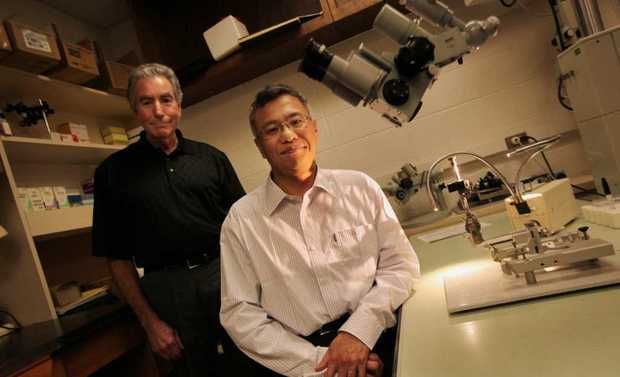
Silver and Lee

Thankfully, those in the field of regenerative medicine are moving towards a solution. This week saw the publication of an article by Dr Jerry Silver and team in the Journal of Neuroscience entitled ‘”Nerve Regeneration Restores Supraspinal Control of Bladder Function after Complete Spinal Cord Injury”. Although still in early, animal stages this is great news for those relying on catheters.

Hope is here, and change is on the horizon!

Cure Girls

Lesioni Spinali: c’è molto di più del “non camminare”

Le realtà sulle lesioni del midollo spinale é molto più complessa del semplice “non camminare”. Quando si diventa paralizzati, non si è più in grado di coordinare i segnali complessi che percorrendo il midollo spinale permettono la minzione. La vescica diventa “paralizzata” e le persone affette da paralisi spesso non sono in grado di dire quando hanno bisogno di urinare e non possono più  andare in bagno senza utilizzare cateteri, altri ausili correlati e un ampio uso di farmaci.

bladders/catheterisationOgni forma di cateterizzazione provoca problemi significativi per la salute delle persone paralizzate in quanto causa l’introduzione di batteri microscopici, direttamente nella vescica, che originano infezioni delle vie urinarie. Nelle persone affette da paralisi, le infezioni del tratto urinario provocano un aumento significativo di spasmi dolorosi e della spasticità in tutto il corpo, ma anche nella vescica stessa, causando perdite di urina. Le infezioni del tratto urinario sono spesso accompagnate da febbre, brividi e stanchezza debilitante, ognuna delle quali influisce gravemente sulla capacità dell’individuo di condurre una vita indipendente e appagante. Se non trattate, queste infezioni possono essere causa di ulteriori complicazioni mediche, ospedalizzazione e anche di morte causata da sepsi.

Le Persone Paralizzate non avendo altri metodi alternativi disponibili per urinare devono usare i cateteri nonostante i rischi sopra descritti. L’accortezza e i migliori farmaci al mondo non prevengono la colonizzazione batterica della vescica paralizzata; si può solo mascherarne i sintomi. Per superare il problema, abbiamo bisogno di una cura.

Silver and LeePer fortuna, qualcuno nel campo della medicina rigenerativa si sta muovendo verso una soluzione. Questa settimana infatti è stato pubblicato, nel Journal of Neuroscience, un articolo del Dr.Jerry Silver e del suo team intitolato: “Nerve Regeneration Restores Supraspinal Control of Bladder Function after Complete Spinal Cord Injury” (Rigenerazione nervosa ripristina il controllo sopraspinale della funzione della vescica dopo una lesione completa del midollo spinale).

Anche se la sperimentazione animale é ancora ai primi stadi, questa è una grande notizia per coloro che sono costretti ad usare cateteri.

C’è speranza, il cambiamento è all’orizzonte.

Cure  Girls

$20m Wasted on Anniversary Celebrations: Why it’s time for leadership change at the Rick Hansen Foundation

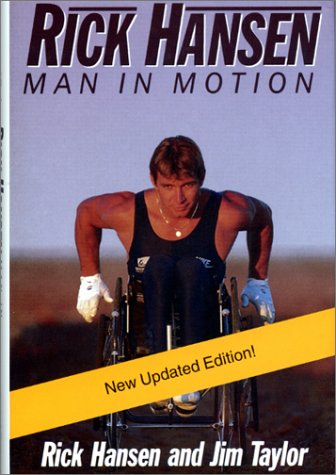
Rick Hansen - Man in Motion25 years ago, Rick Hansen completed his ‘Man in Motion’ World Tour – a trans-global wheelchair push-fest to raise money for research and those living with spinal cord injury. To celebrate this anniversary (and Rick’s continued standing as a Canadian hero), the Rick Hansen Foundation (RHF) has recently celebrated the 25th anniversary. A scathing article “Behind the Rick Hansen Foundation” in Canada’s The Star Phoenix newspaperoffers us an interesting insight into where this organisation gets its money from and how it spends it. Prepared to be shocked!

Seasoned cure campaigners, will be familiar with the Rick Hansen Foundation (RHF). In 2011/12, cure activists launched a campaign which aimed to find out what percentage of funding RHF was spending on a cure for chronic spinal cord injury (SCI). Despite hundreds of supporters’ requests for transparency through several email campaigns, RHF refused to be open about what they were spending their millions on. Talks eventually broke down and activists were dismissed with well-meaning but essentially empty rhetoric about the need for collaboration and the importance of care.

David Baines June 22nd article in The Star Phoenix supports what advocates have long suspected – there is no coherent strategy is place to ensure chronic SCI becomes curable. What’s worse is that this organisation is eating the lion’s share of funding and there is no accountability to those it purportedly serves.

The table below summarises the total cost of the anniversary expenditure, estimated to be in the region of $17m – $19m (Canadian dollars). Some could argue that to make money you have to spend money, but as we shall see later, expenditure for the celebrations far out-weighed any revenues generated by the anniversary celebrations.

Activity  Cost
Cross-Canada Relay $10.94m
Homecoming Gala $1.95m
International Conference $1.44
“International Outreach” Programme £1.27m
“Planat” – online accessibilities rating tool $1.1m
Total Anniversary Expenditure $17m -$19m

Let’s look specifically at what the money for the celebrations was spent on. The largest expenditure, costing nearly $11m was the cross-Canada relay which retraced Hansen’s original route. No expense was spared for this and instead of using a torch, participants received specially made ‘Rick Hansen Medals’. The celebrity-studded ‘Homecoming Gala’ weighed in $1.95m and generated only $274,572, resulting in a net loss of $1.67m. RHF staged an international conference in Vancouver as part of these anniversary celebrations, the aim of which was to share ‘best practices for spinal cord research and care’. Costing $1.44m and generating only $200,600 it resulted in another net loss of $1.24m.

Other anniversary celebrations included an “International Outreach Programme” which saw Hansen and his team go on a global tour, the aim of which was to further collaboration on spinal cord research and care. The cost for this came in a $1.27m and as there were no measurable outcomes it’s difficult to evaluate if this programme was value for money.

The anniversary celebrations also saw the launch of “Planat” – an online ratings tool that enables users to rate the accessibility of buildings and public spaces. It’s apparently being well received but software specialists have queried the cost; a hefty $1.11m.

RHF has failed to recoup any of its anniversary expenditure through revenues as the Foundation made a large miscalculation regarding how much they thought the celebrations would generate. The goal was to raise $250m in donations and future commitments but as the table below shows only $84m has been secured, a majority of which is tax-payer money.

Source  Amount
Government grants, corporate contributions & sponsorships that were received and spent during the anniversary campaign $23.3m
Provincial Gov’t funding for the BC Neuro-trauma Fund (Not new funding, to be spread over 5 years) $10m
Provincial Gov’t funding for Rick Hansen Institute (Not new funding, to be spread over 7 years) $11
Federal Ministry of Western Economic Diversification (WED) (last tranche of a $13.5m, three-year funding agreement) $4.5
Federal Ministry Western Economic Diversification (WED) (to be spread over five years) $35m
 “Alberta government repurposing” $500,000
Total revenue generated during anniversary celebrations $83.3m

So, were the celebrations worth it? It would appear that a majority of the generated income would have been donated regardless of the anniversary celebrations, rendering anniversary expenditure increasingly difficult to justify. RHF has countered this argument by suggesting that one of the primary goals of the anniversary celebrations was to ‘raise awareness’. Again, with no measurable targets or outcomes, it’s anyone’s guess if this goal has been met.

RHF expected revenues to be greatly boosted by the anniversary celebrations but, as the table below shows, there were no significant increases in total revenue.

Year Ending Total Revenues
31st March 2010 (the year prior to the tour launch) $24.9m
31st March 2011 (during tour) $22.4m
31st March 2012 (during tour) $27.2m

And it’s not just the anniversary celebrations that are raising questions about financial leadership at RHF. The article raises questions about a lack of commitment to financial transparency, unethical financial practices regarding taxes and unjustified and secretive compensation packages.CANADIAN PUBLIC RELATIONS SOCIETY - The Canadian Public Relation

The Foundation argues that the investment of $17m – $19m in the anniversary celebrations was calculated, insisting that it was a strategic investment to capitalise on a one-time opportunity. However, the figures speak for themselves; it was a gamble to invest so much in the anniversary celebrations and it clearly hasn’t paid off. The anniversary celebrations can only be seen for what they really are: a huge waste of desperately needed funds.

Stay tuned to Cure Girls, StemCells&AtomBombs and CareCure to find out how you can help address the mismanagement of desperately needed funding.

Cure Girl Ruth

The Contradictions of Spinal Cord Injury

walking on sunshine

Every day I read interviews of people who have spinal cord injury,  and every time I hear repeating no sense sentences.

I respect their different opinions but I cannot understand HOW paraplegics and tetraplegics think.

It is clear that spinal cord injury completely changes the lives both of the injured and the people who live with them.

It is true that we have survived and we must try to live our lives (especially in respect of who cannot), but it is also true that to live a really enjoyable life in our case is utopia.

When I say this people who don’t know me think I’m depressed, lonely or I haven’t accepted my condition. They tell me it isn’t true and despite the wheelchair I can do anything I want.

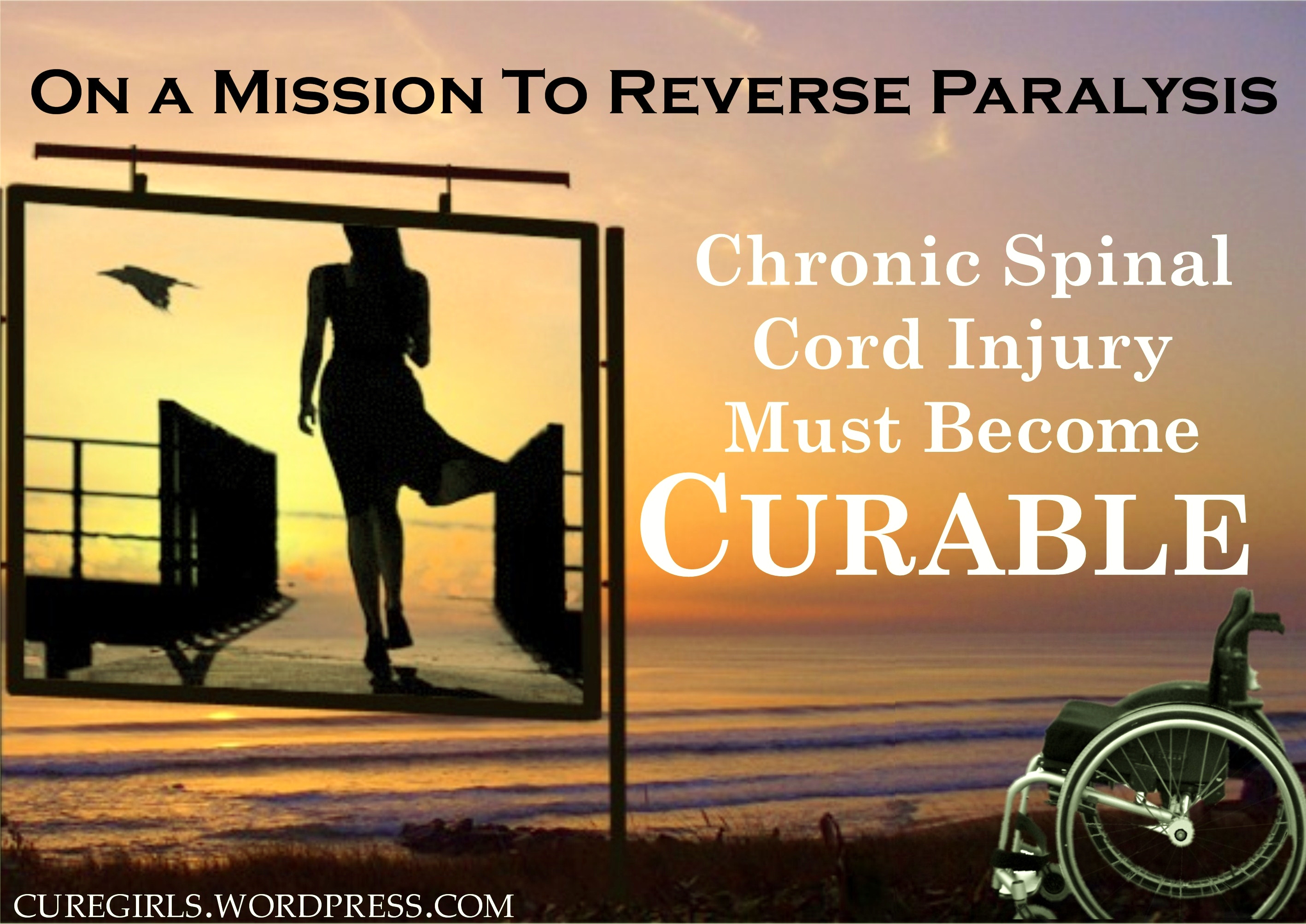
Cure Girls - On A Mission To Reverse Paralysis - Chronic Spinal Cord Injury Must Become Curable

Cure Girls – On A Mission To Reverse Paralysis – Chronic Spinal Cord Injury Must Become Curable

If  it were true, I would be walking on the beach with my friends, the Cure Girls or even a nice young man.

I would really love that.

I realise that the vast majority of us [including me] often feel helpless when facing with the consequences of spinal cord injury and then activate a sort of self defence mechanism.

Often we don’t speak about the ‘real’ consequences of spinal cord injury and we do even less in public.

The inability to manage our bodies independently often makes us uncomfortable and embarrassed. we try to hide what we can. i think we do it for different reasons and more or less unconsciously. Perhaps we want not be “pitied”; we hope that the glances of sorrow and set phrases that we are asked diminish.

But after twelve years of being FORCED with living in a wheelchair, I realized this is useless as who see us and “love us” is very sorry for what has happened. This is a spontaneous HUMAN REACTION that we can identify with.

The ability to understand that being paralysed is not NICE or FUN.

I don’t like to arise pity on people but I have a spinal cord injury that is visible to all; you cannot hide behind a finger and say that not much has changed or even argue that our life has improved.

Often we challenge our limits, not for passion, but just to show others that we are strong. In my opinion this is hypocrisy. I’ve heard a million times outbursts of para & quadriplegics exhausted and frustrated by their situation but they confess to me: ”I have a family, friends, I cannot let them see that I feel bad and I’m not happy. I have to give the example to my children, they should be proud of me and so I want them to believe that I’m strong, I don’t want them to be worried.”

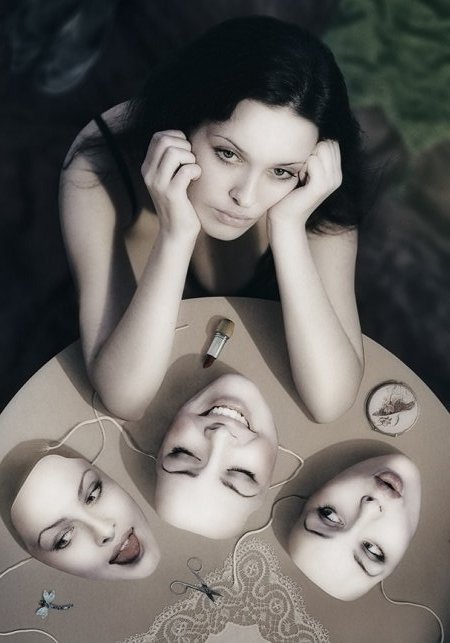
So every morning we dress the mask of the spinal cord damage smiling and active… But it is just a mask.

maschera1

I would like to be able to take it off. I would like to be able to smile fully and realise all my dreams.. But I really want to see the people I love to be happy and not see them suffer for the consequences of my spinal cord injury.

How can we do it?  TO SUPPORT RESEARCH TO REVERSE PARALYSIS AND FIND A CURE.

TELLING OTHERS THAT EVERYTHING IS OK AND THAT WE CAN DO EVERYTHING DESPITE OUR DISABILITY DOES NOT HELP ‘US’!

PLEASE.. I ASK ALL OF YOU… REACT, FIGHT FOR A CURE. A CURE THAT WILL GIVE US ALL BACK OUR ‘INDEPENDENT’ LIFE. DON’T CLOSE YOUR MINDS AND DON’T LOSE HOPE.. ABOVE ALL DON’T WAIT FOR SOMETHING TO HAPPEN.
COMMIT YOURSELF TO TAKE ACTION AND SUPPORT RESEARCHERS THAT WILL HELP US WALK AGAIN. DON’T SIT AROUND WAITING FOR A MIRACLE TO HAPPEN.

DON’T SETTLE FOR ANYTHING ELSE BUT ONLY TO FIGHT FOR OUR LIVES BACK.. OUR INDEPENT, ‘WHEELCHAIR FREE’ LIVES!

Cure Girl Loredana

Loredana: "I'm a Cure Girl"

Le Contraddizioni della Lesione Spinale

walking on sunshine

Ogni giorno leggo interviste rilasciate da persone che hanno subito una lesione spinale e ogni volta sento ripetere frasi  assurde.

Pur rispettando il parere di tutti, spesso non riesco proprio a spiegarmi come ragionino i para/tetraplegici (me compresa).

È evidente che una  lesione spinale cambia completamente la vita di chi la subisce e delle persone che gli stanno accanto.

Ora, se è vero che siamo sopravvissuti  e che quindi dobbiamo cercare di vivere la nostra vita nonostante tutto (soprattutto nel rispetto di chi non c’è più), è anche vero che “VIVERSI E GODERSI LA VITA DAVVERO” nel nostro caso è praticamente un’utopia.

Quando dico questo la gente che non mi conosce pensa che io sia depressa, che non abbia accettato la mia condizione, che sia una persona sola e mi dice: “Non è vero, nonostante la carrozzina puoi far tutto lo stesso, basta volerlo”.

Cure Girls - On A Mission To Reverse Paralysis - Chronic Spinal Cord Injury Must Become Curable

Cure Girls – On A Mission To Reverse Paralysis – Chronic Spinal Cord Injury Must Become Curable

Se così fosse vi assicuro che in questo momento starei passeggiando sulla spiaggia in compagnia delle mia amiche Cure Girls (e magari anche di qualche bel giovanotto).

Mi rendo conto che la stragrande maggioranza di noi (me compresa) spesso si sente impotente di fronte alle conseguenze della lesione spinale e quindi attiva una sorta di meccanismo di autodifesa.

Non parliamo quasi mai delle reali conseguenze che una mielolesione comporta, e lo facciamo ancora meno in pubblico. L’incapacità di gestire in modo autonomo il nostro corpo spesso ci mette a disagio, ci imbarazza, cerchiamo di nascondere quel che possiamo e lo facciamo per diversi motivi e più o meno inconsapevolmente, forse per non sentirci “compatiti” sperando così che gli sguardi di dispiacere e le frasi di circostanza che ci vengono rivolte diminuiscano e/o ci facciano meno male.

Ma dopo 12 anni vissuti legata a questa sedia a rotelle ho capito che è inutile, chi ci vede e ci ama, si dispiacerà di quanto c’è accaduto. Questa È UNA SPONTANEA REAZIONE UMANA CHE CI PERMETTE DI IMMEDESIMARSI NELLA VITA DELL’ALTRO, frutto di quella consapevolezza che l’essere paralizzato non è bello né tanto meno divertente.

Meno male che esiste questo sentimento, se così non fosse, il mondo sarebbe abitato solo da persone egoiste e cattive.

Non mi piace fare “pena” alla gente…ma ciò non toglie che ho una lesione spinale, questo è visibile a tutti, non ci si può nascondere dietro un dito e dire che tanto non è cambiato nulla o addirittura sostenere che la nostra vita sia migliorata.

Spesso sfidiamo i nostri limiti, non per passione, ma solo per far vedere/credere agli altri che siamo forti.  C’è molta ipocrisia in noi. In questi anni mi è capitato milioni di volte di sentire sfoghi di para-tetraplegici sfiniti e frustrati dalla situazione che però mi dicevano: “Io ho una famiglia, degli amici, non posso far vedere loro che sto male e non sono felice, io devo dare l’esempio ai miei figli, devono essere orgogliosi di me e quindi voglio fargli credere di essere forte per non farli preoccupare etc.”

Quindi ogni santa mattina indossiamo la maschera del mieloleso sorridente e attivo etc.. Ma è pur sempre una maschera. maschera1

Io vorrei poterla togliere, vorrei poter sorridere appieno, realizzare tutti i miei sogni…ma soprattutto vorrei non dover più vedere persone che amo soffrire a causa di una lesione spinale. Come possiamo riuscirci? A mio parere solo RENDENDO LA PARALISI REVERSIBILE, FACENDO SÌ CHE SI TROVI PRESTO UNA CURA.

IL DIRE AGLI ALTRI CHE VA TUTTO BENE E CHE SIAMO IN GRADO DI FAR TUTTO LO STESSO, NON CI AIUTA, TUTT’ALTRO!

Rivolgo quindi un appello a tutti voi:

REAGITE! LOTTATE PER UNA CURA! PER QUALCOSA CHE DAVVERO VI POSSA RESTITUIRE LA VOSTRA VERA VITA INDIPENDENTE!!! NON CHIUDETE LE VOSTRE MENTI, NON PERDETE LA SPERANZA E SOPRATTUTTO NON ASPETTATE CHE GLI ALTRI FACCIANO QUALCOSA, IMPEGNATEVI SE VOLETE DAVVERO SMETTERE DI ESSERE “PARALIZZATI”. NON ASPETTATE IL MIRACOLO, PONETE IN ESSERE AZIONI CHE AIUTINO I RICERCATORI A RIMETTERCI IN PIEDI.

NON ADATTATEVI PENSANDO CHE NON VI SIANO ALTRE STRADE DA PERCORRERE, NON ACCONTENTATEVI DI VITE VISSUTE A METÀ.

LOTTATE PER RIAPPROPRIARVI DAVVERO DELLA VOSTRA LIBERTÀ!

Cure Girl Loredana
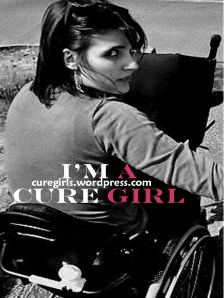
Loredana: "I'm a Cure Girl"