
“Hope has two beautiful daughters; their names are Anger and Courage. Anger at the way things are, and Courage to see that they do not remain as they are.”
Pablo Neruda
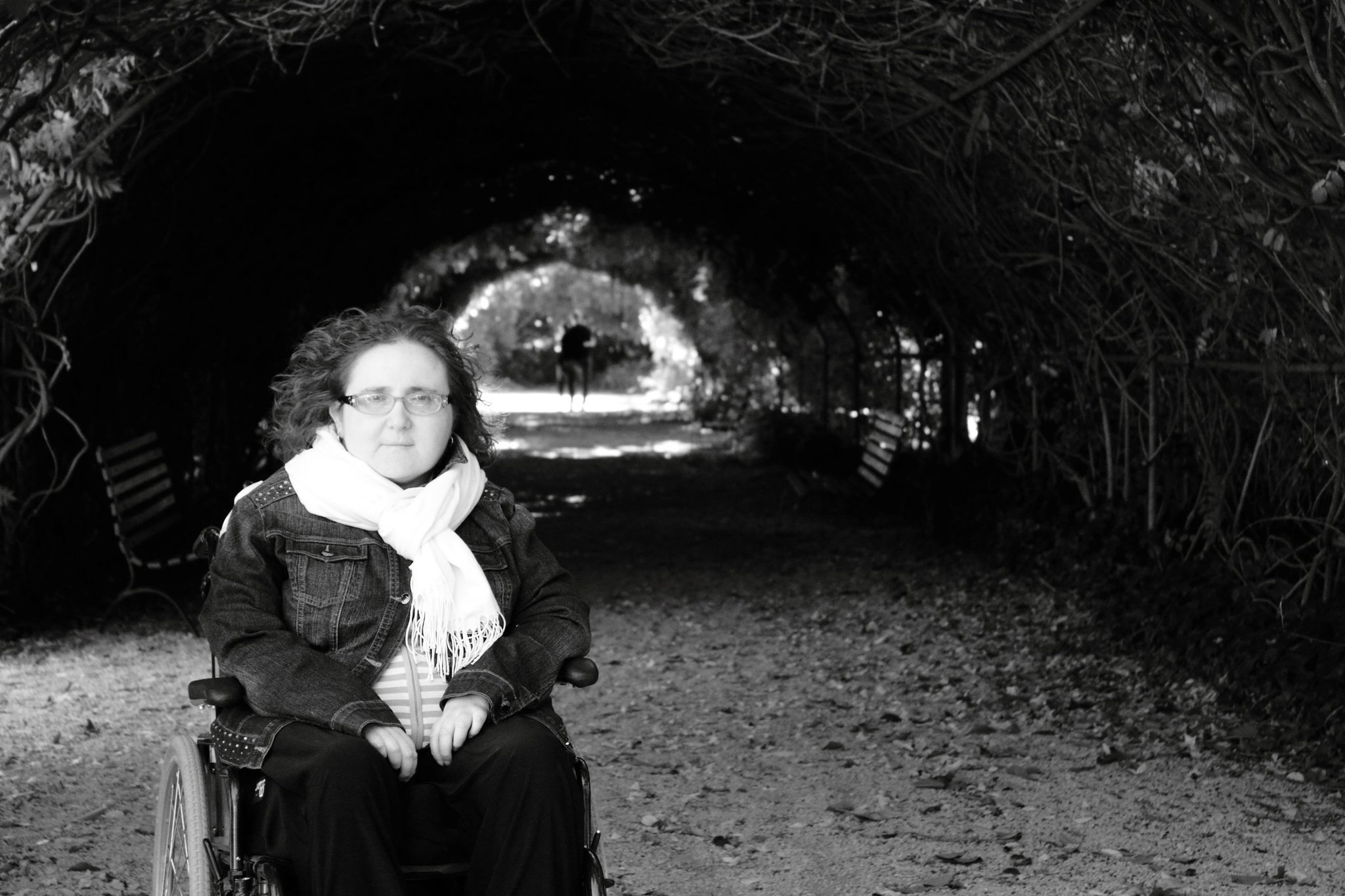
Loredana speaks out on Italian Television. She wants to raise awareness and show people that a CURE for Chronic Spinal Cord Injury is of vital importance.
English version: http://www.youtube.com/watch?v=_p1fDUk-OHo&feature=youtu.be
Introduction: When disability is not a shame. The story we show you is a strong message to society that has to deal with a problem never completely solved. By Piergiorgio Giacovazzo
Loredana:“Please don’t make a sad piece and don’t use a sad music.”
“’I’m not angry, I just feel like I want to live”.
Piergiorgio: Loredana is a woman living in Galliavola (Pavia). She was 17 when she became paraplegic from a car accident.
L: “You miss your independent life your real life the life you were dreaming of”
P: Like Loredana, about 1500 people suffer from spinal cord injury and become paralysed every year. According to the ministry of health, there are currently 80,000 Italians living with paralysis.
P: “Sorry… What music should I use?”
L: “These boots are made for walking”
P: Loredana can’t wait for someone else to do something about this situation and she is fighting every day with her blog “Cure Girls” and her page “Sruotiamoci” to create public awareness about supporting medical research in finding a cure for spinal cord injury.
L: “I think that a big part of the problem is that people don’t believe a cure is possible, but science is proving to us that it is possible also with recent studies from Switzerland proving that the spinal cord can be regenerated . So we only need to support this kind of research with more money and let people know that we can and must do it.”
P: Loredana is not a dreamer. Regeneration of the nervous tissue is no longer unrealistic. In 2002 the European Parliament urged member States to step up funding for research for a cure for spinal cord injury also suggesting that funds could be raised from alcohol tax revenue and from traffic fines as spinal injuries are primarily caused by car accidents, but these recommendations are unheard of in Italy.
L: We shouldn’t come across as dreamers or as those who are being duped. We need to pay attention to this. We are making giant steps in every field and we must do it in this one because it is too important… Paralysis must become reversible”
P: After her accident, Loredana completed a degree in political science and took a Masters degree in local development. She has become a local councillor and now works for a transport company.
L: “I was able to go to college because my mother followed me in days, she came with me standing in the cold or in the classroom next to mine”
P: Like many others in the same condition, Loredana competes in her very own paralympics everyday, out of the spotlight, but she really doesn’t like the image of the paralympic athlete.
L: “Disabled people are shown as superhuman, people that go beyond their limits but this fails to show the difficulties of being disabled and the difficulties of everyday life the one who has to fight with a catheter every day or with the loss of personal autonomy. This should make us think and to ensure that those who organize the Paralympics maybe could try to support research by the sponsors to the benefit of all and not the few”.
Original Italian Version: http://www.rai.tv/dl/RaiTV/programmi/media/ContentItem-a307620e-95d0-4616-ac43-ed14ef2ee51c.html
Loredana on TG2: http://www.rai.tv/dl/RaiTV/programmi/media/ContentItem-f259addc-88c5-4ebe-afed-014248397400-tg2.html
La Cure Girl Loredana parla in TV a Rai 2. L’intervista è andata in onda il 4 marzo 2013 nella rubrica TG2 – “Costume e Società”.
Obiettivo: Incrementare la consapevolezza delle persone, spiegando loro che una CURA per le lesioni spinali croniche è davvero qualcosa di vitale importanza.
Clicca http://www.youtube.com/watch?v=DTYFRmTh74Q per guardare il video.
Vedi anche Loredana al TG2 del 24/02/2013: http://www.rai.tv/dl/RaiTV/programmi/media/ContentItem-f259addc-88c5-4ebe-afed-014248397400-tg2.html

 Mi chiamo Barbara, ho 36 anni e sono tetraplegica dal 1987, quando, in seguito ad una caduta dall’altalena, ho subito una lesione cervicale del midollo spinale che mi ha compromesso l’uso totale dei quattro arti. Mi ritengo una “Cure Girl” perché desidero con tutto il cuore che si trovi presto una cura per tutti i tipi di lesione spinale e per tutti i livelli. Ma, in modo particolare, per tutte quelle lesioni che comportano la perdita totale e/o parziale dell’autonomia nel gestire la propria persona.
La gravità della mia lesione e il suo alto livello (C4-C5) ha determinato una condizione di dipendenza per lo svolgimento delle azioni necessarie al vivere quotidiano, causando grandi disagi non solo a me. Essere dipendente dagli altri è una delle cose peggiori che l’essere umano può sperimentare. Tutto questo è aggravato dal fatto che, nella maggior parte dei casi, sono i familiari a prendersi tutto il carico dell’assistenza. Perciò, solo una cura definitiva al fine di recuperare almeno tutti quei movimenti che permettono la totale autonomia è l’unica soluzione per cambiare le cose; ogni altro rimedio è solo un palliativo.
L’attenzione sulla ricerca medica per la cura delle lesioni spinali è pressoché inesistente, soprattutto in Italia; e questo accade perché inesistente è l’informazione sulle conseguenze che questo tipo di trauma comporta… come se non bastasse l’immobilità di per sé ad esigere che una cura venga trovata al più presto!
 Grazie ad Internet possiamo diffondere la nostra voce e far conoscere a tutti cos’è effettivamente una lesione spinale, così tutti si renderanno conto di quanto è importante tenere sempre accesi i riflettori sulla ricerca medica, come avviene per tante altre malattie invalidanti.
“La felicità è… sentire i capelli fra le dita… prendere in braccio un bambino… applaudire a un concerto… tenere fra le mani una tazza di latte caldo… camminare a piedi nudi sulla sabbia bagnata…
Basta poco per essere felici.”
La Vostra Cure Girl Barbara
My name is Barbara, I’m 36 years old and I’m quadriplegic since 1987, when, following a fall from my swing, I suffered a cervical spinal cord injury that has affected me the full use of my arms and legs. I consider myself a “Cure Girl” because I wish with all my heart that a cure will be found soon for all types of spinal cord injury and for all levels. In particular, for all those injuries that cause the total and/or partial loss of autonomy in taking care of themselves.
The severity of my injury and its high level (C4-C5) resulted in a condition of dependence to perform the actions necessary to daily life, causing great inconvenience not only to me. Being dependent on others is one of the worst things that a human being can experience. All this is aggravated by the fact that, in most cases, family has to take the whole load of assistance. Therefore, only permanent cure to recover at least all those movements that allow complete autonomy is the only way to change things; every other remedy is only a palliative.
The focus on medical research to cure spinal cord injuries is very lacking, especially in Italy, and this is because there is a very little information on the consequences which this type of trauma involves… as if paralysis itself is not enough to require the need of a cure!
Thanks to Internet we can spread our voice and let everyone know what is actually a spinal injury, so everyone will realize how important it is to always keep the spotlight on medical research, as it occurs with many other disabilities.
“Happiness is… feel the hair through your fingers… take a child in your arms… clapping at a concert… hold in your hands a cup of hot milk… walking barefoot on wet sand…
It does not take much to be happy.”
Our Cure Girl Barbara

Una buona notizia per la cura delle Lesioni Spinali Croniche arriva da Stem Cells Inc.
“Stem Cells Inc. ha annunciato oggi che ad un anno dal completamento del primo gruppo di pazienti, con lesione cronica completa del midollo spinale, sottoposti al trapianto di cellule staminali, le cellule in questione hanno continuato a mostrare un ottimo profilo di sicurezza. E’ stato inoltre osservato dopo sei mesi un aumento della funzione sensoriale in due dei tre pazienti del primo gruppo trapiantato, sensibilità che è stata preservata dopo un anno dall’osservazione. Il terzo paziente è rimasto stabile.”(1)
Questo è solo un primo passo ma ci dimostra che i nostri sogni di una cura potrebbero diventare una realtà!
“Mentre c’è necessità di essere cauti in questa fase nell’interpretare i dati provenienti da un piccolo gruppo di pazienti trattati, è altresì notevole riscontrare per la prima volta che un paziente passi da una lesione spinale cronica completa ad una lesione spinale incompleta dopo trapianto di cellule staminali neurali. Siamo molto incoraggiati dal fatto che le cellule sembrano trasmettere beneficio clinico a questi pazienti con questa grave lesione spinale.” (2)
 “I still feel your touch in my dreams. Forgive me my weakness, but I don’t know why. Without you it’s hard to survive.”
Cascada – Everytime We Touch (2006) http://www.youtube.com/watch?v=gWB-J0EEFac
ON A MISSION TO REVERSE PARALYSIS - CHRONIC SPINAL CORD INJURY MUST BECOME CURABLE
It's finally here . . . the 7th annual gathering of Cure Warriors.
The Report For The Seriously Dedicated Community Interested In Research and Science for Patients (not projects) To Treat or Cure Chronic SCI Paralysis
ON A MISSION TO REVERSE PARALYSIS - CHRONIC SPINAL CORD INJURY MUST BECOME CURABLE


 CURE GIRLS