Supportiamo una Cura reale, non dei robot!

Il Longitude Prize 2014  è una competizione con 10 milioni di sterline in premio per aiutare a risolvere uno dei più grandi problemi del nostro tempo.  Gestito e sviluppato da Nesta, con the Technology Strategy Board come partner.

Come Funziona?

Il Longitude Prize offre la possibilità di scegliere tramite una votazione tra sei grandi sfide, una di queste è la paralisi.

Una grande notizia, pensereste, ma sfortunatamente questo premio potrebbe essere vinto per costruire dei dispositivi compensativi, come dei robot da indossare.

Gli organizzatori del Longitude Prize affermano che ciò di cui abbiamo bisogno non è la medicina rigenerativa poiché è ancora molto lontana, (vedasi il  BBC documentary dal 13.30)  mentre invece le macchine possono aiutarci a vivere con la nostra paralisi!

Mi auguro di riuscire a spiegare che questi dispositivi non possono assolutamente fare questo.

È molto preoccupante, ma sembra che la cura delle lesioni spinali sia stata dimenticata a vantaggio di gadget che non fanno recuperare le funzionalità.

Noi Cure Girls vi invitiamo a sostenerci per dire che vogliamo trattamenti rigenerativi, non robot!

Siamo contro le macchine ed ecco le motivazioni:

  • non hanno nessun impatto sulle funzioni vescicali/intestinali/sessuali né sulla respirazione, soffriremo ancora per le infezioni
  • non hanno nessun impatto sulla sensibilità e i dolori neuropatici, continueremo ad avere dolore e bisogno di farmaci
  • non influiscono sulla funzionalità di braccia e mani, un grave problema per i tetraplegici
  • richiedono assistenza per essere utilizzati, quindi sono un ostacolo all’indipendenza
  • sono ingombranti, lenti e non pratici per l’uso quotidiano, per non parlare dei costi
  • non possono essere utilizzati da chi ha subito una lesione alta, poiché è richiesta la stabilità del tronco

Ma il problema più grave è che questi dispositivi vengono etichettati come “cura”, dispositivi che risolverebbero i nostri problemi.

Spero che questo blog abbia chiarito che i robot NON risolvono NESSUNO dei nostri problemi.

Se la paralisi vincerà il premio, un cospicuo finanziamento per la ricerca verrà dirottato per sviluppare macchine che non faranno nulla per il recupero delle funzionalità.

Unisciti alle Cure Girls per dire NO! ai robot e SI! alla medicina rigenerativa.

Basta andare sulla FB page del Longitude Prize  o su Twitter @longitude_prize e postare il proprio commento.

4 maggio 2014: Le Cure Girls alla Wings for Life World Run

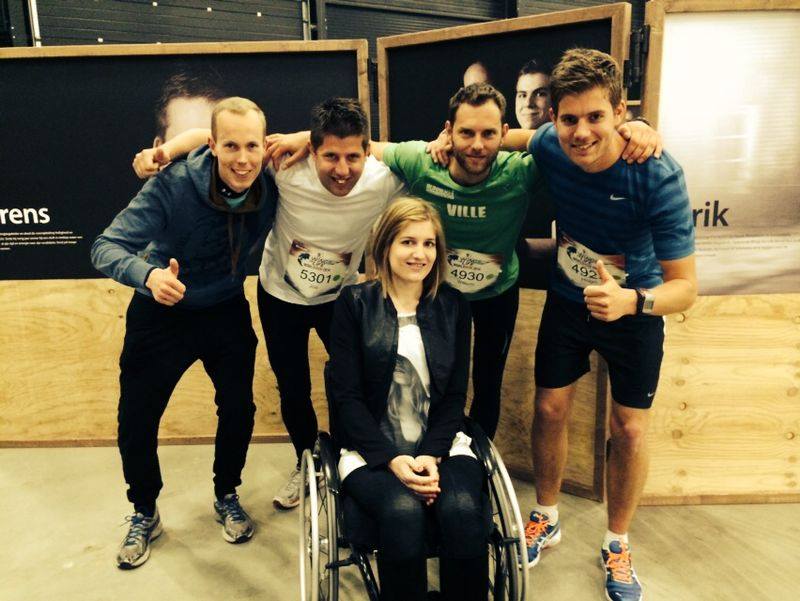
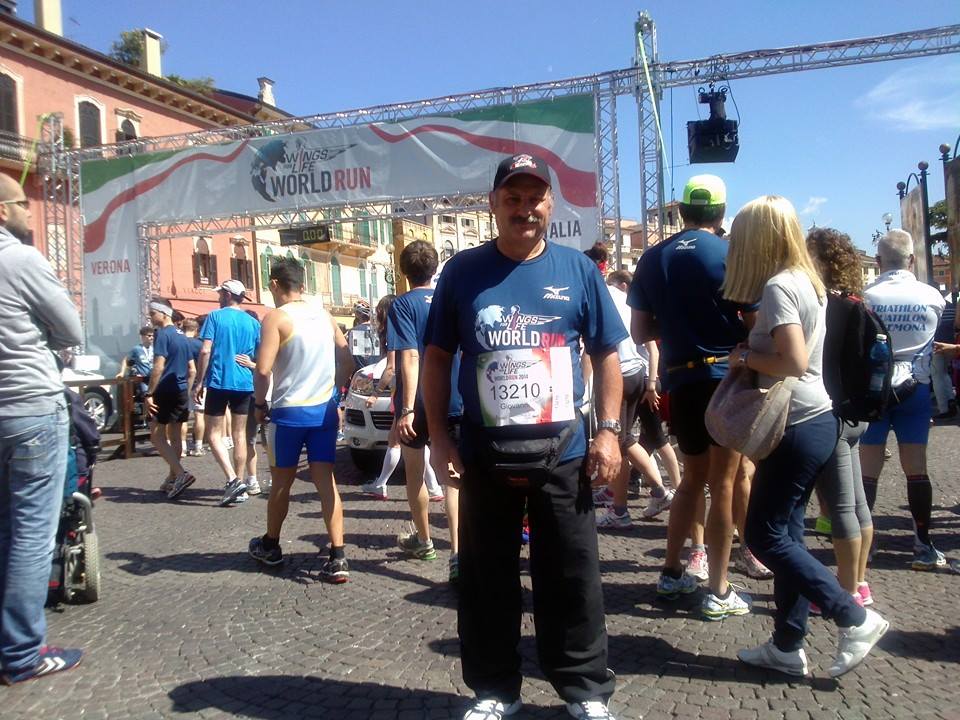
Il 4 maggio scorso le Cure Girls hanno preso parte alla Wings for Life World Run. Una corsa globale disputata in 34 località differenti nel mondo, dove tutti hanno corso nello stesso momento! Il 100% dei proventi della manifestazione è stato destinato alla Fondazione Wings for Life, che finanzia la ricerca per curare le lesioni del midollo spinale. La corsa ha unito atleti di tutto il mondo, in una gara,  per correre per chi non può più farlo! Arcangela e Loredana sono state a Verona in ItaliaLoredana e Arcangela a Verona , Maaike nei Paesi Bassi e Sabrina in Brasile. Le altre Cure girls che non potevano essere presenti hanno sostenuto questo evento in tutto il mondo, cercando di farlo conoscere. La Wings For Life World Run è stata ben supportata da quelle di noi che non potevano essere presenti. Questo è stato infatti un evento che ha mostrato uno spettacolo molto positivo a sostegno della cura per la paralisi . Abbiamo bisogno di continuare a sostenere questo messaggio e mostrare al mondo quanto sia importante una cura e cosa significhi per tutti noi mielolesi. Noi cure Girls, siamo state piacevolmente colpite dallo spirito di tutti quelli che hanno partecipato e seguito questo evento. Il vincitore maschile globale è stato Lemawork Ketema (ETH) che ha corso per  78,57 km superando i 35.396 atleti in gara provenienti da 164 nazioni differenti. La vincitrice è stata Elise Selvikvag Molvik (NOR) che ha percorso una distanza di 54,79 km. Grazie alla World Run sono stati raccolti più di 3 milioni di euro che la fondazione Wings for Life destinerà a progetti di ricerca di una cura per la paralisi.  La prossima edizione si disputerà il 3 maggio 2015! Grazie a tutti per il vostro supporto!  Alla prossima!

Cure Girl Loredana e Rebecca


DRENTHE – PAESI BASSI

Domenica scorsa sono andata a correre nel mio paese, i Paesi Bassi . La partenza era al Circuito di Assen. Il tempo era bello, quindi è stato un grande giorno per i corridori e per le persone che erano li a guardare. E’ stato fantastico vedere così tante persone, famose e non, correre per una grande causa : Una cura per le lesioni del midollo spinale .
MAAIKEPer la prima volta dal mio infortunio, ho sentito le persone parlare di una cura per le lesioni spinali, non solo in quell’ambito e in mia presenza, ma anche nelle settimane precedenti la corsa. Mi stavo abituando al fatto che i medici volessero mandarmi da un buon psicologo quando dicevo loro che credo che una cura per le lesioni del midollo spinale sia all’orizzonte. Certo, so che sarà difficile per le persone con un vecchio infortunio come il mio, ma non è impossibile. I ricercatori dicono che non è più una questione di se, ma di quando. Quindi c’è sicuramente speranza per tutti coloro che vivono con una lesione del midollo spinale . E spero che un evento di portata mondiale, come lo è stata la World Run,  possa accelerare il processo. Sarebbe bello vivere in un mondo dove la lesione del midollo spinale è solo un lontano ricordo.
Voglio ringraziare le persone che hanno corso per me. Il prossimo anno spero di avere molti più familiari e amici coinvolti in questa corsa. Hanno un anno per allenarsi, quindi non penso ci sarà alcun problema!

Cure Girl Maaike

VERONA – ITALIA

Sì, il 4 maggio, c’eravamo anche noi Cure Girls alla corsa che in Italia si è svolta nella magnifica Verona, città patrimonio mondiale dell’Unesco.

Giornata splendida sotto tutti i punti di vista. E’ stata una tipica giornata primaverile che ha premiato i tantissimi partecipanti che hanno risposto con entusiasmo a questa competizione unica nel suo genere e con un fine tanto importante ma purtroppo ancora troppo “ignorato”.  LA LESIONE SPINALE DEVE DIVENTARE CURABILE e finalmente questo messaggio è stato dato a gran voce.la partenza a Verona Emozionante la partenza e divertente seguire gli sviluppi della corsa sia in Italia che all’estero grazie ai continui aggiornamenti forniti dagli organizzatori. Molti i nomi di rilievo sia nell’ambito sportivo che non, persone che hanno voluto dare il loro contributo partecipando all’evento. Impressionanti i tempi e i km fatti da corridori professionisti che si sono sfidati fino allo stremo delle forze. Il nostro Giorgio Calcaterra si è aggiudicato la vittoria maschile italiana ed è arrivato 4° nella classifica mondiale. Tantissima anche la risposta delle persone “comuni” che hanno contribuito a far sì che Wings For Life raccogliesse  3.000.000 Euro, importo  interamente destinato al finanziamento di progetti di ricerca che noi Cure Girls continuiamo a richiedere che siano principalmente per le lesioni croniche. Insomma, è stato bello vedere tanta partecipazione e finalmente sentir parlare di quanto sia importante una cura!

Avanti così allora e….al prossimo 3 maggio 2015 per la seconda edizione!

Cure Girl Arcangela


Io sono una delle tante persone che ha contribuito a tutto questo e solo una delle tante persone mielolese che hanno avuto qualcuno a correre per lei/lui. Per me ha corso realmente il grande papà di Loredana,Il papà di Loredana ma c’erano altre due persone che non erano fisicamente presenti a Verona, ma che hanno fatto quella corsa con il cuore e lo spirito: mia sorella e suo marito Giovanni.

E c’ero anch’io! Ho voluto partecipare a modo mio a questo evento straordinario, pedalando con la mia speciale bicicletta nel momento in cui tutti i corridori in tutto il mondo tagliavano il nastro della partenza.

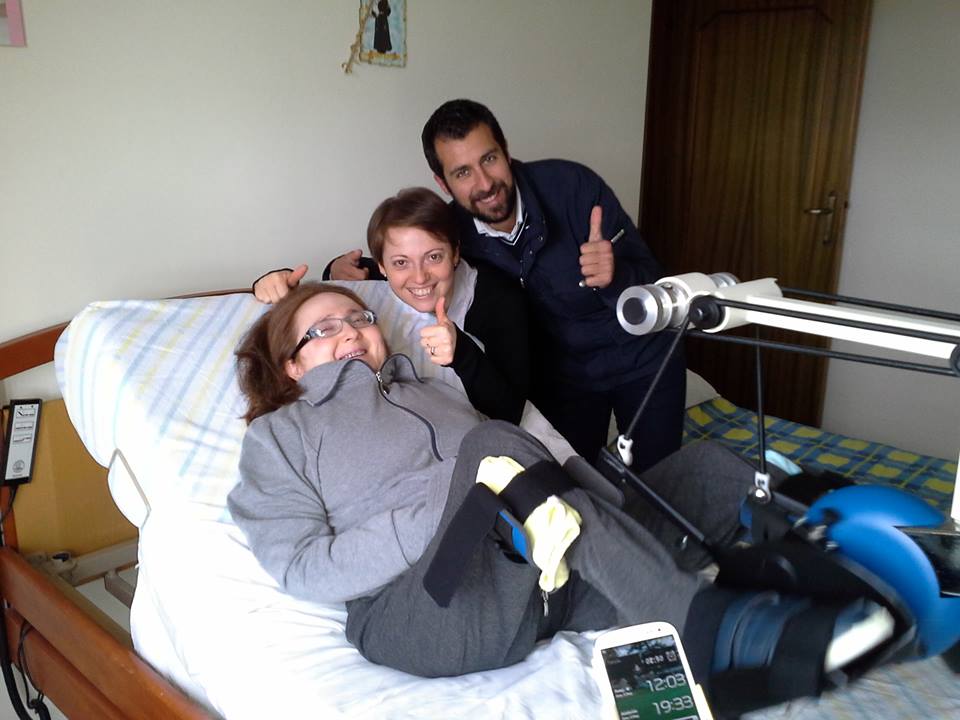
Ho voluto farlo perché era la sola cosa che potevo fare, dal momento che proprio le conseguenze della mia lesione spinale non mi hanno permesso di poter essere a Verona per assistere alla corsa. BarbaraPer questo, anche se sono stata simbolicamente la prima ad essere raggiunta dalla catcher car, con la mia pedalata di 30 g/min, è come se avessi corso tutti i chilometri fatti da tutti i partecipanti, per gridare al mondo che la lesione spinale cronica deve diventare curabile.

Cure Girl Barbara

FLORIANOPOLIS – BRASILE

Era ancora buio e non vedevo l’ora di partecipare a quella che sarebbe stata la gara più importante per me. La WFLWR ha la nobile missione di destinare il 100% delle sue entrate per finanziare la ricerca per la cura delle lesioni del midollo spinale, ma porta anche a tutto il mondo, ovvero a più di 35 città di diversi paesi che hanno partecipato a questa prima edizione, l’impegno a generare fondi per i ricercatori.

SABRINALa gara doveva iniziare esattamente alle 07:00 a Florianopolis, e negli orari equivalenti nel resto del mondo, anche dove era ancora alba. Questa strategia è stata geniale per creare uno spirito di condivisione nello stesso giorno, nella stessa ora, per una causa. È stato un onore incommensurabile partecipare all’evento ed essere in grado di mobilitare 20 amici arrivati a Florianopolis per correre con me. Ringrazio infinitamente loro e quelli che hanno contribuito anche se non hanno potuto correre.

L’essere umano si distingue dagli altri animali quando usa la sua intelligenza per fare del bene agli altri. Questa è stata la sensazione che ho avuto mentre correvo con mia sorella e i miei amici: portare speranza a tante persone che si trovano in una situazione simile alla mia, poter parlare di questo nella principale trasmissione televisiva del Paese, per far capire l’urgenza di una cura a coloro che non si trovano su una sedia a rotelle. Ed è stato un grande successo visto i tanti messaggi che ho ricevuto in seguito.

Dopo aver percorso 11 km,  la certezza è che sarò di nuovo lì il 3 maggio 2015,  e così fino al giorno in cui l’emozione di attraversare la linea del traguardo sarà sostituita dalla felicità di vedere i primi passi di chi ritorna a camminare.

Cure Girl Sabrina


CHARITY EXTRAVAGANZA NIGHT IN AID OF SPINAL RESEARCH

EXTRAVAGANZAOn Saturday 31st May my best friend Freda and I are organising a CHARITY EXTRAVAGANZA NIGHT in aid of Spinal Research. It is being held in a cool venue called Yager Bar which is in St Pauls, Central London. The tickets are £60 each and that includes admission, glass of champagne and also appetisers along with a great line up of entertainment. We are very lucky to have the help of a fantastic PR guy called Victor Trocki who has worked promoting members of the Royal family, celebrities, wag’s etc. Victor has organised many events and we really couldn’t put this together without him and are so grateful that he is really wanting to support our cause of finding a cure for spinal cord injury. We have some great acts all of which are giving their time and support free of charge. Mozez

Mozez, ex frontman of the group Zero 7 will be performing. So excited as I’m such a big fan of his and have seen him perform live… he’s amazing.

 CARLA THOMAS

Carla Thomas will be performing and she has worked with amazing artists such as Alexander O’ Neal. A very good friend of mine Carl will be doing his drag act, very funny guy along with some dancers and glamorous girls circulating the crowd. Also we have auctions and raffles with some fabulous prizes to be won. After all of the acts and auctions you’ll be able to party the night away as we also have a couple of DJ’s lined up.

Media will also be involved so hopefully good coverage in newspapers etc too. The tickets are selling fast so purchase yours now by contacting myself or Freda 07770-418-482 or you can contact Michelle Marsh directly at Spinal Research on 01483-898-786. I would like to thank everyone who is contributing to this superb evening. Both myself and Freda are so thankful for everyone’s generosity. See you on the 31st everyone for raising as much money as we possibly can to fund a cure for paralysis. Myself and the CURE GIRLS will keep on fundraising and campaigning until we can regain our independence and also WALK ONCE MORE.

From Cure Girl Lolly x

Barbara: “I THOUGHT IT WAS JUST A TEMPORARY SITUATION”

Barbara BucciRead Cure Girl Barbara’s story on Wings for Life, Spinal Cord Research Foundation website 

How to avoid the inevitable? The cure would be a good start.

For days now the same question echoes in my head: “Is it possible to change someone’s essence?” According to metaphysics, the “essence” of something is made by the unchanging qualities of that same thing. This definition alone serves to explain that, in essence, we cannot change what we are.

lais-souzaSince January 27™ I’ve been thinking about Laís Souza. The ex-gymnast has undergone 13 surgeries over the course of her career and, unable to return to the gymnastics, she accepted the invitation to try skiing. Many people will ask themselves “why didn’t she simply stop training and accepted her ‘limits’?”. My answer will be: because there is no such possibility.Once I watched a documentary about the human nature and the mechanism of self- preservation which refers to the fear of dying, and this is what prevents people from exposing themselves to risk situations, although some people simply do not have it.

Laís suffered a severe spinal cord injury, obviously it is too early for any prognosis but taking into account the style of life and the seriousness of the injury, no prognosis is satisfactory and probably the sport will never again be part of her routine. Thinking about the past of Laís, I bet that if it were not for the seriousness of the injury, she would soon go back skiing. I believe chemistry explains a lot about this, but to make it simple – without talking into consideration the endorphin and its variants – the desire to expose oneself to the risk is part of the essence of many athletes and even amateurs, like me for example, and no one can judge the essence of another. It is very likely that if I had not suffered an injury in the spinal cord, on a hot beach day like today, I’d be surfing and balancing myself on the air, even because I would have probably fallen before. I think that while we have an idea of the risk, we don’t have a device to trigger the fear. As for you, who’s reading this article at this moment and have already thought of taking your son’s skateboard away, I would advise: Only 6% of all spinal cord injuries occur while practicing sports, however more than 50% are resulted from car accidents.

How to avoid the inevitable?? How? The cure would be a good start.

wfl 4/5/2014On May 4th, Floripa will host the Wings for Life World Run, the first global race of the history, bringing together 35 cities of the world, running together, with 100% of the funds reverted to the researches in favor of the Spinal Cord Injury cure.

Run for Laís, run for me, but mainly: run for all those who in the future do not deserve to have their dreams interrupted suddenly, being either a close relative or a stranger. If you cannot run, you can still register to help, with only 26 dollars you will make a new world for a lot of people!  Cure Girl Sabrina

Come evitare l’inevitabile? Una cura sarebbe un buon inizio

Da giorni mi risuona in testa una domanda: “È possibile cambiare l’essenza di una persona”? Secondo la metafisica, l’”essenza” di qualcosa è fatta di qualità immutabili di quella stessa cosa. Basta questa definizione a spiegare che non possiamo cambiare ciò che siamo.

lais-souzaDal 27 gennaio penso sempre a Laís Souza. L’ex ginnasta ha subito 13 interventi chirurgici nel corso della sua carriera e, non potendo più praticare la ginnastica, ha accettato l’invito di provare a sciare. Molte persone si saranno chieste “Perché non ha semplicemente smesso di praticare sport ed ha accettato i suoi limiti”? La mia risposta è “Perché non era una possibilità fattibile”. Una volta guardavo un documentario sulla natura umana e il meccanismo di autoconservazione che è legato alla paura di morire, ed è ciò che impedisce alle persone di esporsi a situazioni rischiose; ma per alcuni questo meccanismo non scatta. Laís ha subito una grave lesione spinale; ovviamente è troppo presto per fare qualsiasi prognosi, ma considerando lo stile di vita e la gravità della lesione, nessuna prognosi potrà essere soddisfacente, e probabilmente lo sport non farà mai più parte della sua vita. Pensando al passato di Laís, scommetto che, se non fosse per la gravità della lesione, lei tornerebbe presto a sciare. Credo che la chimica spieghi molto a riguardo, ma per farla semplice – tralasciando l’endorfina e i suoi succedanei – il desiderio di esporsi al rischio fa parte dell’essenza di molti atleti ed anche amatori, come me per esempio, e nessuno può giudicare l’essenza di un altro. Se non avessi avuto una lesione spinale, in una calda giornata da spiaggia come oggi, sicuramente starei surfando e dondolando in aria. Credo che mentre abbiamo un’idea di cosa sia il rischio, non abbiamo un meccanismo che inneschi la paura.

Ora, a voi che state leggendo questo articolo, e state già pensando di nascondere lo skateboard a vostro figlio, vi dico: solo il 6% di tutte le lesioni spinali sono causate praticando sport, oltre il 50% sono il risultato di incidenti stradali.

Come evitare l’inevitabile? La cura sarebbe un buon inizio.

wfl 4/5/2014Il 4 maggio, Floripa ospiterà la Wings for Life World Run, la prima corsa globale della storia, che porterà 35 città del mondo a correre insieme. Il 100% del ricavato andrà a finanziare la ricerca per la cura delle lesioni spinali.

Correte per Laís, correte per me, ma soprattutto correte per tutti coloro che in futuro non meritano di vedere i loro sogni interrotti improvvisamente, siano essi familiari o estranei.

Se non potete correre, potete comunque registrarvi e contribuire alla raccolta fondi con pochi dollari.

Così renderete migliore il mondo per tante persone!

Cure Girl Sabrina

Como evitar o inevitável? A cura seria um bom começo

Há dias uma pergunta ecoa na minha cabeça: “É possível mudar a essência de alguém?” Segundo a metafísica, a essência de uma coisa é constituída pelas propriedades imutáveis da mesma. Essa definição responde por sí só: Em essência não podemos mudar o que somos.
lais-souzaDesde segunda não paro de pensar em Laís Souza. A ex-ginasta sofreu 13 cirurgias ao longo da carreira e, impossibilitada de voltar a ginástica, aceitou o convite de apostar no esqui. Muitas pessoas devem se perguntar porque ela simplesmente não parou, aceitou seus “limites” eu respondo: Porque não existe essa possibilidade.
Certa vez eu vi em um documentário que existe na natureza humana um mecanismo de auto-preservação que remete ao medo de morrer, e é isso que impede as pessoas de se exporem a situações de risco, embora algumas pessoas simplesmente não o tenham.
Laís sofreu uma grave lesão medular, obviamente é cedo para qualquer prognóstico mas levando em consideração o estilo de vida e a altura da lesão nenhum prognóstico é satisfatório, provavelmente o esporte nunca mais fará parte da rotina dela. Pensando no histórico de Laís, eu aposto que se não fosse a gravidade da lesão ela em breve estaria de volta à neve. Acredito que a química explique muita coisa mas trocando em miúdos sem falar em endorfina e suas variantes, o desejo de se expor ao risco faz parte da essência de muitos atletas e até de atletas amadores, como eu por exemplo, e não cabe a ninguém julgar a essência do outro. É bem provável que se eu não tivesse sofrido uma lesão na medula, em um dia como hoje de praia e calor, eu estaria surfando no balanço, até porque já havia caído anteriormente. Acho que temos a noção do risco, não temos é esse dispositivo que aciona o medo.
Você que lê isso agora e já pensa em arrancar o skate do seu filho eu aconselho: Apenas 6% das lesões na medula ocorrem da prática de esportes, mas mais de 50% são decorrentes de acidentes de carro.
Como evitar o inevitável?? Como?
A cura seria um bom começo.
wfl 4/5/2014Wings For Life World Run, a primeira corrida global da história que reúne 35 cidades do mundo, correndo juntas, com 100% das verbas revertidas para as pesquisas em prol da cura da Lesão Medular.
Corra por Laís, corra por mim, mas principalmente: corra por todos aqueles que no futuro não merecem ter seus sonhos interrompidos repentinamente, seja ele um ente próximo ou um desconhecido.
E se não puder correr faça mesmo assim a sua inscrição, são 26 dólares que podem fazer um novo mundo para muita gente!

Cure Girl Sabrina

Our visit to the laboratories of Pharmacology, Department of Science Health, University of Milan

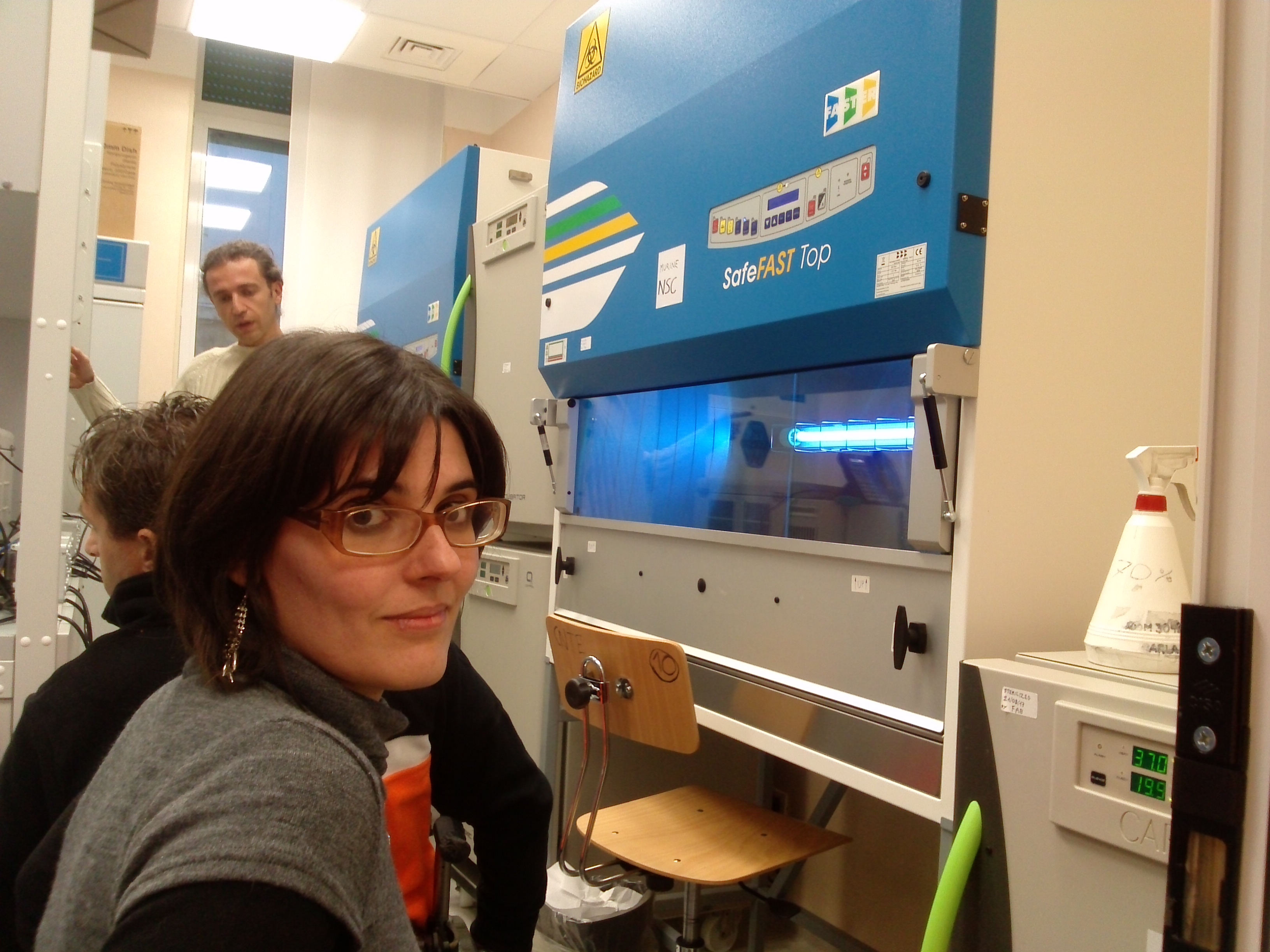
On January 20th 2014 the Cure Girls went to visit the labs of pharmacology of the university of Milan and met with Dr. Daniele Bottai. He showed us the new labs and gave us an interview to explain what his team is working on with regards to a cure for SCI.

1. Can you briefly describe the research that you are doing in relation to spinal cord injury?

When in 2006, I moved at the University of Milan, I have begun to get interested in Spinal Cord Injury (SCI) using a new (at the time) “drug”: neural stem cells. Between 2002 and 2006, I worked in the Laboratory of Professor Angelo Vescovi where I learned to manipulate neural stem cells (from different regions of the brain) both human and mouse.

In these 8 years spent to the University of Milan we have been studying the role of different types of stem cell in transplantation in animal model of SCI, in particular, we have studied the effects of murine embryonic and neural stem cells and human amniotic fluid (AFCS ) with the purpose to find the sources of stem cells that were an available source and with the appropriate characteristics for the treatment of neurological diseases .

In general, we can say that these cellular processes (performed in acute spinal cord lesion) have positive effects and are significant from a functional and morphological point of view. After treatment with the cells listed above, the mice returned to walk (albeit not the same as they did before the lesion); while lesioned not treated animals are able to move their hind limbs, but not to walk. (These results have been summarized in three scientific papers:

D. Bottai, D. Cigognini, L. Madaschi, R. Adami, E. Nicora, M. Menarini, A.M. Di Giulio, A. Gorio (2010).Embryonic Stem Cells Promote Motor Recovery and Affect Inflammatory Cell Infiltration in the Spinal Cord Injured Mice Experimental Neurology 223, 452-463 ;

D.  Bottai , L. Madaschi, A.M. Di Giulio and A. Gorio. (2008) Viability -Dependent Promoting Action of Adult Neural Precursors in Spinal Cord Injury . Molecular Medicine , 14 (9-10), 634-644.

 On the bases of these results, we asked what was the mechanism that caused this improvement.

The answer was that in this model the role of animal cells is purely trophic and they are not going to replace, if not in small portion, damaged or dead cells.

Various are the trophic molecules (cytokines) that are involved in this phenomenon. Recently, we have focused our attention on amniotic fluid cells. We chose this cell type because their availability since the at term cesarean delivery could represent an unlimited source of stem cells with no ethical issues and few risks for the child and the mother.

In a work that a few days ago has been accepted for publication (D. Bottai , G. Scesa , D. Cigognini, R. Adami , E.. Nicora, S. Abrignani, A.M. Di Giulio, and A. Gorio Third trimester amniotic fluid NG2 -positive cells are effective in improving on repair in spinal cord injury. Experimental Neurology.) we have shown that a trophic factor, produced by the AFCS, which is important for the induction of the morphofunctional recovery, was the hepatocyte growth factor (HGF) and that this cytokine was produced only by particular sub- populations of our cells or those expressing on their surface the NG2 protein (a membrane proteoglycan). Such a membrane protein can be hopefully used in the future to select from the amniotic fluid liquid the cells that express NG2 and so have a therapeutic action.

We are currently investigating what is the correlation between NG2 and HGF.

2. Acute injury or chronic injury present any difference for a research approach? Could you explains the differences and the advantages and disadvantages.

I do not think we can talk about differences between acute and chronic lesion in terms of advantages and disadvantages. These are two different pathological conditions, the acute progress into the chronic with the passage of time mostly because there is a de- myelination process.

In this context, we are dealing with two different types of patients the acute ones, namely that a few days or weeks have suffered damage to the spinal cord which have a very extensive inflammatory condition that exacerbates the primary mechanical injury further damaging the tissue and those, who instead, underwent chronic spinal cord injury for more time (months and years) in which degeneration induced by primary damage and the secondary SCI causes the formation of a cavity surrounded by the glial scar that separates the lesion from the undamaged tissue and prevent nerve regeneration.

Currently the researcher and clinician are faced with these types of patients because in the first instance they have not been able to prepare effective therapies to treat acute patients.

The therapeutic approach to the patient who recently underwent spinal damage is intended to reduce the compression state and to control the secondary damage due to inflammation through the drug methylprednisolone, inter alia, that approach does not seem to have a sufficient efficacy, as evidenced by the fact that the number of chronically para or quadriplegics is unfortunately increasing.

In the chronic patient instead we find ourselves facing a very different situation with the blood-brain barrier that is closed, and a glial scar consisting mainly of fibroblasts from the meninges and reactive astrocytes that produce proteoglycans (extracellular matrix molecules) that are responsible for the inhibition growth of axons.

In this situation, the therapeutic approach is vastly different from that prepared in the state of acute spinal cord injury.

In fact, removal (either mechanical – surgical or enzymatic) is a sine qua non con-diction in order to prepare any kind of intervention to restore or replace dead or damaged cells and rebuild the axons making them grow in the appropriate direction.

In this context, the treatment of chronic patients need multiple concurrent interventions:

  1.   Treatment with drugs that induce axonal regeneration;
  2.   Treatment with drugs that reduce the inhibitory effects of glial scar both mechanical and enzymatic chondroitinase that due to factors such as chemical inhibitors, blockers of Nogo and other myelin components;
  3.   Treatment with cells or systems consisting of nanomaterials and cells.

Some of these approaches were ineffective few years ago but in the light of developments in nanomaterials and new types of stem cells I think it might be appropriate to re-examine these pathways.

3. How do you think we can solve the problem of scar?

As I mentioned in the previous answer, in order to find an approach that leads to the recovery of sensory and motor pathways, it is necessary to make the scar area permissive for the survival of cells that are transplanted and that would allow axonal growth in the manner to ensure the recovery of the routes of transmission.

With this in mind, scar removal is definitely needed and should be prepared to minimize the risk of inducing further damage.

In this context, the experimental work in the preclinical phase or with animal models is essential but at the same time very complex given that small animals have practical difficulties of intervention and larger animals have problems is housing costs that are beyond the economical capability of most the laboratories that I know.

Finally, the translation of the results obtained in the preclinical stage is very difficult for a variety of patients such as those with spinal cord injury whose disease is highly variable due to the fact that the damage is very random and therefore leads to differences between the patient and the other.

4. Can you apply your research to Chronic Spinal Cord Injury?

The applicability of the cells in the amniotic fluid in models of chronic spinal cord injury must be verified experimentally, so I can say a priori that such an intervention can be prepared but obviously need the appropriate adjustments of the experimental protocol. In fact, while in the acute model we have a purely trophic action in the case of chronic treatment the intervention should be at the level of local scar in order to determine whether these cells could contribute to modify the scar itself and reconstitute the ways by means of the differentiation in cells central nervous system (neurons, oligodendrocytes and astrocytes) or by inducing endogenous stem cells to differentiate into mature cells. In this context, previous treatment with chondroitinase could improve the success of the experiment.

5. Do you have collaborations with other research institutions ? Which ones?

As I mentioned in our discussion in the institute , I believe that partnerships are the lifeblood of research. In recent years I have had collaborations with various research groups and consortia. Firstly put the FUNGENES: Functional Genomics of Human Embryonic Stem Cells; funded by the European Economic Community, Sixth Framework Programme. (€ 500,000 for 3 years) (in collaboration with Prof. A.L. Vescovi of which I was the deputy). This project was set out to investigate the characteristics proliferative and differentiative of stem cells (especially embryonic). This project involved and brought together about a dozen institutions across Europe and basically was the first step that allowed me to improve my knowledge on stem cells.

– Study of functional recovery induced by transplantation of neural stem cells in animal models of acute spinal cord contusion, funded by Fondazione Cariplo.(€ 300,000 for 2 years) (Coordinator Prof. A.L. Vescovi).

It was a project that introduced me in the world of spinal cord injury, and thanks to Prof. Vescovi, the project that make me chose to continue the research in neurodegenerative diseases

– Neural stem cells: a new approach to mobile spinal muscular atrophy; Asamsi non-profit organization funded by foundations and Families of SMA Italy . (Head with Prof. A. L. Vescovi) .

I am also currently working on the project “Role of stem cells in the treatment of glaucoma” (glaucoma is a neurodegenerative disease) with Professor Mario Luca Rossetti, which conducts clinical and research in my department and with Dr. Valentina Massa (which also works in my department) for a study of neurological disorders.

6. What are the steps needed to translate your result in human?

To start a clinical trial phase 1-2, that provide the safety analysis (which most likely this type of cells have since they belong to the class of mesenchymal which have already been extensively tested in several clinical trials) and effectiveness, our results must be first validated in other laboratories. Subsequently, it will be necessary to derive the cells so that they are compatible with the transplant in humans that means that the cells must satisfy conditions of Good Manufacturing Practice (GMP ) that involves the use of materials “human grade” in order to reduce the risk to the patient (for pathologies as the well- known prion disease such as mad cow disease. This procedure is currently out of our economical availability as it requires economical conditions of sterility and purity that we cannot get unless you build the appropriate laboratories.

7. Is there any particular obstacle that slows down your work?

The current financial situation of our country, where the cuts have affected many strategic sectors of the economy and cultural is experienced by us researchers, with much apprehension. While it is true that funding should be allocated to those who do the research and then excellence must be a prerequisite for this contingency (Italian and international), cuts in recent time unfortunately affected groups or researchers that produce high quality work. So there is now the hope that this trend may change and that organizations and associations (onlus) can help the researcher by funding specific projects.

We thank Dr. Bottai for his precious work and for giving us the opportunity to visit the center and for answering our questions.

Cure Girls Arcangela, Marina and Loredana


Visita ai laboratori di farmacologia dell’ospedale San Paolo di Milano – Intervista al Dr. Bottai

Lunedì 20 gennaio le Cure Girls sono state in visita ai laboratori di farmacologia dell’ospedale San Paolo di Milano.

Di seguito potrete leggere l’intervista che ci ha gentilmente rilasciato il Dr. Daniele Bottai.

  1. Dr. Bottai ci descrive brevemente la ricerca che state portando avanti in merito alle lesioni spinali?

“Da quando, nel 2006, mi sono trasferito all’Università degli Studi di Milano ho iniziato ad interessarmi di Lesione Spinale utilizzando un nuovo (a quei tempi) strumento “farmacologico”: le cellule staminali neurali. Avevo lavorato per 3 anni nel Laboratorio del Professor  Angelo L. Vescovi e avevo imparato a manipolare le cellule staminali neurali (cioè provenienti da alcune regioni del cervello) sia umane che di topo.

In questi 8 anni passati all’Università degli Studi di Milano siamo riusciti a studiare il ruolo di diversi tipi di cellule staminali nel trapianto in animali cha avevano subito una lesione spinale, in particolare abbiamo studiato gli effetti di cellule staminali neurali e embrionali murine e umane del liquido amniotico (AFCs) con il proposito di trovare delle fonti di cellule staminali che fossero facilmente reperibili e con le appropriate caratteristiche per il trattamento di patologie neurologiche.

In generale possiamo dire che questi trattamenti cellulari (effettuati in acuto) hanno effetti decisamente positivi e statisticamente significativi da un punto di vista funzionale (motorio) e morfologico. Dopo trattamento con le cellule sopra elencate, i topi tornano a camminare (anche se in maniera non uguale a come facevano prima della lesione); mentre gli animali lesionati e non trattati sono in grado di muovere gli arti posteriori ma non di camminare. Questi risultati sono stati riassunti in 3 lavori scientifici:

Bottai D., Cigognini D., Madaschi L., Adami R., Nicora E., Menarini M., Di Giulio A. M., Gorio A. (2010). Embryonic Stem Cells Promote Motor Recovery and Affect Inflammatory Cell Infiltration in Spinal Cord Injured Mice. Experimental Neurology 223; 452–463;

Bottai D., Madaschi L., Di Giulio A. M. and Gorio A.. (2008) Viability-Dependent Promoting Action of Adult Neural Precursors in Spinal Cord Injury. Molecular Medicine, 14(9-10); 634-644.

In base a questi risultati ci siamo quindi chiesti quale fosse il meccanismo che induceva questo miglioramento nell’animale.

La risposta è stata che in questo modello animale il ruolo delle cellule è prettamente trofico e esse non vanno a sostituire, se non in minima parte, le cellule danneggiate o morte.

Varie sono le molecole trofiche (citochine) che sono coinvolte in questo fenomeno. Recentemente ci siamo concentrati sulle cellule del liquido amniotico. Abbiamo scelto questo tipo di cellule poiché la disponibilità di liquido amniotico da parti cesarei a termine è pressoché illimitata e non presenta problematiche di natura etica ed esigui rischi per il nascituro al momento del prelievo.

In un lavoro che pochi giorni fa ci è stato accettato per pubblicazione (Bottai D., Scesa G., Cigognini D., Adami R., Nicora N., Abrignani S., Di Giulio A.M., and Gorio A. Third trimester NG2-positive amniotic fluid cells are effective in improving repair in spinal cord injury. Experimental Neurology ) abbiamo dimostrato che un fattore trofico, prodotto dalle AFCs, importante per l’induzione del recupero morfofunzionale era il fattore di crescita degli epatociti (HGF) e che questa citochina veniva prodotta solo da particolari sub popolazioni delle nostre cellule ovvero quelle che esprimevano sulla loro superficie la proteina NG2 (un proteoglicano di membrana). Tale proteina di membrana potrà essere, si spera, utilizzata in futuro per selezionare tra le cellule del liquido amniotico quelle che hanno una azione terapeutica. Attualmente stiamo studiando quale sia la correlazione tra NG2 e HGF.”

2.      Ricerca su lesione acuta o su lesione cronica: ci spiega la differenza? Vantaggi e svantaggi.

“Non credo che possiamo parlare di differenze tra lesione acuta e cronica in termini di vantaggi e svantaggi, sono due condizioni patologiche diverse, ovviamente l’acuta progredisce nella cronica con il passare del tempo con un danno che è prevalentemente di de-mielinizzazione.

In questo contesto ci troviamo di fronte a due differenti tipologie di pazienti ovvero quelli acuti e cioè che da pochi giorni o settimane hanno subito il danno al midollo spinale i quali sono in uno stato infiammatorio molto pronunciato che esacerba il danno meccanico primario danneggiando ulteriormente il tessuto e quelli cronici che invece hanno subito il danno spinale da più tempo (mesi ed anni), in cui la degenerazione indotta dal danno primario e quello secondario della SCI causa la formazione di una cavità circondata dalla cicatrice gliale che separa la lesione dal tessuto non danneggiato ed impedisce la rigenerazione nervosa.

Attualmente il ricercatore ed il clinico si trovano davanti a queste due tipologie di pazienti poiché in prima istanza non sono stati capaci di approntare terapie efficaci per trattare i malati acuti.

L’approccio terapeutico per il paziente che da poco ha subito il danno spinale è indirizzato alla riduzione dello stato di compressione e al controllo del danno secondario dovuto all’infiammazione tramite il farmaco metil-prednisolone, approccio fra l’altro che non pare essere di una sufficiente efficacia, come si capisce dal fatto che il numero di para o tetraplegici cronici sta, purtroppo aumentando.

Nel paziente cronico invece ci troviamo di fronte ad una situazione ben differente con la barriera ematoencefalica che si è richiusa ed una cicatrice gliale costituita principalmente da fibroblasti provenienti dalle meningi e astrociti reattivi che producono proteoglicani (molecole della matrice extracellulare) che sono responsabili dell’inibizione della crescita di assoni.

In questa situazione l’approccio terapeutico è enormemente differente da quello approntato nello stato acuto della lesione spinale.

Infatti la rimozione (sia essa meccanico-chirurgica che enzimatica) è condizione sine qua non per poter approntare un qualsiasi tipo di intervento volto a ricostituire o rimpiazzare le cellule morte o danneggiate e a ricostruire gli assoni facendoli crescere nell’appropriata direzione.

In questo contesto il trattamento del paziente cronico necessita di più interventi concomitanti:

1)  Trattamento con farmaci che inducano la rigenerazione assonale;

2)  Trattamento con farmaci che riducano gli effetti inibitori della cicatrice gliale sia meccanici che enzimatici con condroitinasi che dovuti a fattori chimici inibitori come bloccanti di Nogo e altri componenti della mielina;

3)  Trattamento con cellule o sistemi costituiti da nanomateriali e cellule.

Alcuni di questi approcci qualche anno fa sono risultati inefficaci ma alla luce degli sviluppi dei nanomateriali e di nuove tipologie di cellule staminali credo che potrebbe essere appropriato ridiscutere queste vie.”

3.      Come pensate si possa risolvere il problema della cicatrice?

“Come ho già accennato nella precedente risposta, affinché si possa pensare ad un approccio che porti alla ricostituzione delle vie sensitive e motorie, occorre rendere la zona della cicatrice permissiva alla sopravvivenza di cellule che vi vengano trapiantate e che possa permettere la crescita assonale con le modalità atte a garantire la ricostituzione delle vie di trasmissione.

Con tale intento la rimozione della cicatrice è sicuramente necessaria e va approntata riducendo al minimo il rischio di indurre nuovi danni.

In questo contesto il lavoro sperimentale in fase preclinica ovvero con modelli animali è essenziale ma al contempo molto complesso dato che animali di piccole dimensioni presentano difficoltà pratiche di intervento e animali più grandi presentano delle problematiche sia di stabulazione e costi che sono fuori dalla portata della gran parte dei laboratori che conosco.

Infine la traduzione dei risultati ottenuti in fase preclinica è molto difficile per una tipologia di pazienti come quelli che hanno la lesione spinale la cui patologia è molto variabile a causa del fatto che il danno è molto casuale e quindi porta a differenze tra un paziente e l’altro”.

4.      Si può applicare la vostra ricerca alle Lesioni Spinali Croniche?

“L’applicabilità delle cellule nel liquido amniotico in modelli di lesione spinale cronica deve essere verificata sperimentalmente quindi a priori posso dire che tale intervento può essere approntato ma ovviamente con gli appropriati aggiustamenti di protocollo sperimentale. Infatti, mentre nel modello acuto noi abbiamo una azione prettamente trofica, nel caso del cronico si potrebbe eventualmente ipotizzare un trattamento locale a livello della cicatrice allo scopo di verificare se queste cellule possano contribuire a modificare la cicatrice stessa e a riformare le vie danneggiate sia differenziandosi in cellule del sistema nervoso centrale (neuroni, oligodendrociti e astrociti) oppure inducendo le cellule staminali endogene a differenziarsi in cellule mature. In questo contesto il precedente trattamento con condroitinasi potrebbe migliorare la riuscita dell’esperimento.”

5.      Avete collaborazioni con altri istituti di ricerca? Quali?

“Come ho accennato nella nostra discussione in istituto, ritengo che le collaborazioni siano la linfa vitale della ricerca, in questi anni ho avuto collaborazioni con vari gruppi di ricerca e consorzi. In primis metterei il progetto Fungenes: Functional Genomic of non Human Embryonic Stem Cells; finanziato dalla Comunita Economica Europea, VI Programma Quadro. (500000 € per 3 anni) (in collaborazione con il Prof. A. L. Vescovi di cui ero il deputy (viceresponsabile)). Tale progetto si prefiggeva di studiare caratteristiche proliferative e differenziative delle cellule staminali. Tale progetto coinvolgeva e raggruppava circa una ventina di istituti in tutta Europa e fondamentalmente è quello che mi ha permesso di meglio affinare le mie conoscenze sulle cellule staminali.

-Studio del recupero funzionale indotto dal trapianto di cellule staminali neurali in modelli animali acuti di contusioni del midollo spinale; finanziato dalla Fondazione Cariplo. (300000 € per 2 anni) (Coordinatore il Prof. A. L. Vescovi).

E’ stato un progetto che mi ha poi introdotto nel mondo della lesione spinale, e al quale devo, grazie all’aiuto del Prof. Vescovi, la scelta nel proseguire la ricerca nelle patologie neurodegenerative

-Cellule staminali neurali: un nuovo approccio cellulare per l’atrofia muscolare spinale; finanziato dalle Fondazioni Onlus Asamsi e Famiglie SMA Italia. (Responsabile con il Prof. A. L. Vescovi).

Inoltre sto attualmente collaborando per il progetto “Ruolo delle cellule staminali nella terapia del glaucoma” (il glaucoma è una patologia neurodegenerativa) con il Professor Luca Mario Rossetti, che svolge attività clinica e di ricerca nel mio Dipartimento e con la dottoressa Valentina Massa (che lavora sempre nel mio dipartimento) per uno studio su patologie neurologiche.”

6.      Quali sono i passi necessari per arrivare a sperimentare sull’uomo le vostre scoperte scientifiche?

“Per poter iniziare una fase clinica 1-2 e che cioè preveda lo studio della sicurezza (che molto probabilmente questo tipo di cellule hanno appartenendo alla classe delle mesenchimali che sono già ampiamente state testate in vari trial clinici) e di efficacia occorrerà prima la validazione da parte di altri laboratori dei risultati che abbiamo ottenuto. Successivamente occorrerà derivare le cellule in modo che siano compatibili con il trapianto nell’uomo ovvero trattarle in condizioni di Good manifacturing practice (GMP) che prevede l’utilizzo di materiali “human grade” allo scopo di ridurre il rischio per il paziente (per patologie prioniche come il ben noto Morbo della mucca pazza ad esempio). Questa procedura è attualmente fuori dalla nostra portata economica dato che necessita di condizioni di sterilità e di purezza che non possiamo ottenere a meno di non costruire dei laboratori appositi.”

7.      Esiste qualche ostacolo particolare che rallenta il vostro lavoro?

“L’attuale situazione finanziaria del nostro paese in cui i tagli hanno colpito molti settori economici e culturali strategici è vissuta, da noi ricercatori, con molta apprensione. Se è pur vero che i finanziamenti debbano essere assegnati a coloro che la ricerca la fanno e quindi la premialità all’eccellenza è una condizione essenziale in questa contingenza (italiana e mondiale), i tagli purtroppo negli ultimi anni hanno toccato anche i gruppi o i ricercatori che producono lavori di qualità. Non c’è quindi che da sperare che questo trend cambi e che eventualmente organizzazioni e associazioni (onlus) possano aiutare finanziando progetti mirati”.

Ringraziamo il dr. Daniele Bottai per la disponibilità e il tempo che ci ha dedicato.

 Cure Girls Arcangela, Marina e Loredana

Our Visit to the Center for Nanomedicine and Tissue Engineering in Milan

We were recently invited by Dr. Fabrizio Gelain  to visit the new ‘Center for Nanomedicine and Tissue Engineering’ (CNTE) located at the Niguarda Hospital in Milan, Italy.

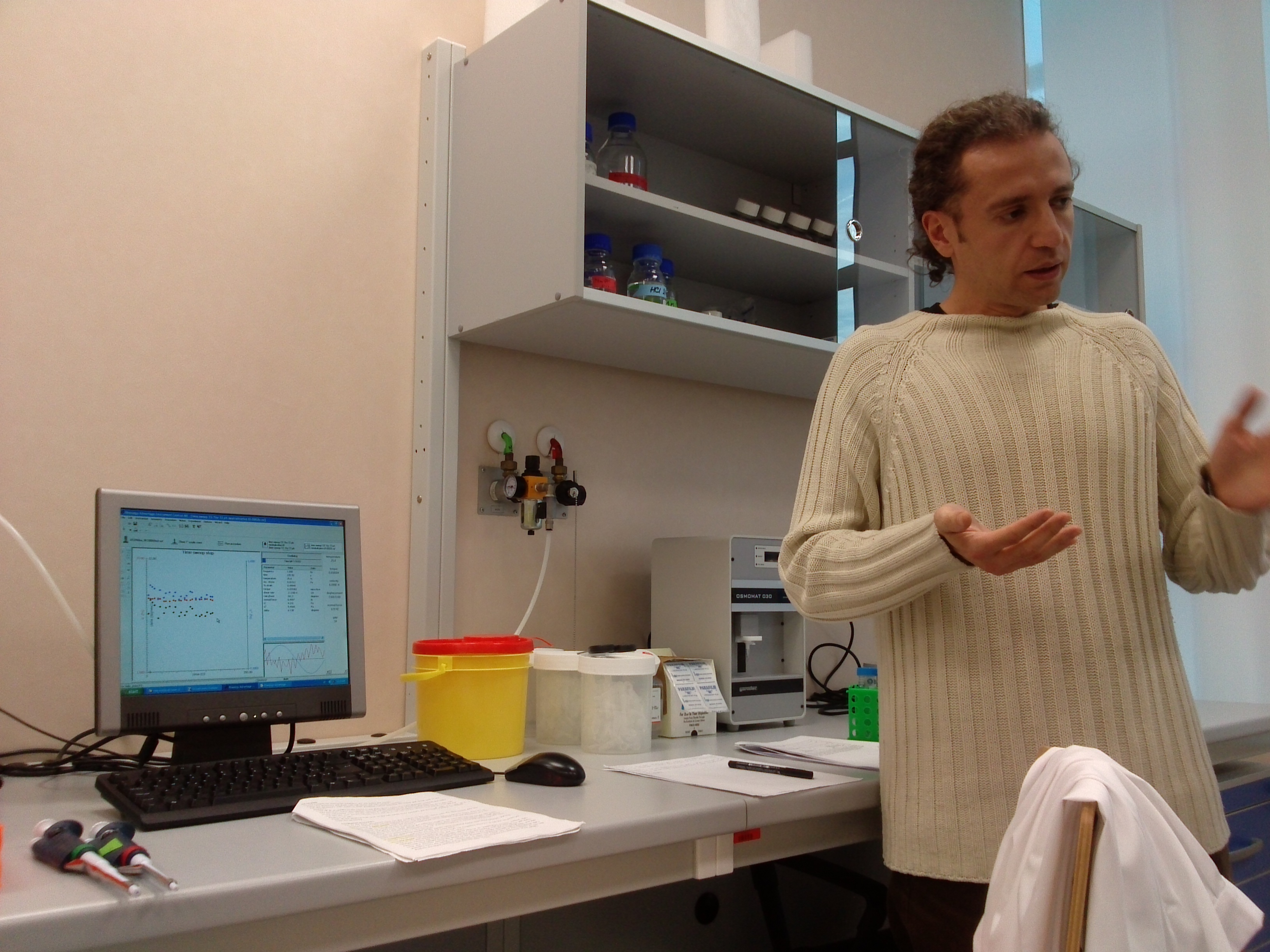
dr. Fabrizio GelainDr. Gelain is co-director of the center and has been working on Spinal Cord Injury (SCI) research for several years. He showed us the new labs and gave us an interview to explain what his team is working on with regards to a cure for SCI.

1) Could you tell us about this new research center and the nanotechnologies that your team is working on?

“Nanotechnology is the production and/or manipulation of materials that have a dimension between 1 and 100 nano-meters; in other words 1 nano-meter = 1 millionth of a millimeter.

At the Center for Nanomedicine and Tissue Engineering (CNTE) we design, synthesize, characterize nanostructured bio-prosthesis that can be naturally absorbed by the body. Here we utilize principles of nanomedicine, physics, materials science, cellular biology and medicine to develop prosthesis implantable in living organisms to repair damaged tissues. Often nanotechnologies are only considered for creating nanoparticles for a controlled release of drugs, for some tumor therapies or for imaging techniques. Our work is dedicated to other important sections of nanomedicine. We synthesize scaffolds that may also contain cells to repair important lesions of biological tissues. We also conduct three-dimensional cell culture experiments in vitro: a more complex paradigm than 2D but much more reliable to predict results in living organisms. That allows us to reduce animal studies which is very important from an ethical point of view and it also significantly reduces time and costs of research.”

2)  How nanotechnology can be used to cure spinal cord injury (SCI)?

“In the case of severe injuries, a portion of biological tissue is lost and it becomes useful to use a scaffold rather than just a cell therapy approach as it is necessary to provide physical and biochemical guidance for endogenous tissue to make regeneration happen. At the same time a scaffold keeps in the right place transplanted cells and guides them to a proper engraftment with the host tissue. In case of SCI very often there is a formation of scar tissue and also of a cyst. In this damaged area it becomes very useful to use a scaffold. Furthermore we have the possibility to design our scaffolds at a molecular level. That allows us to control the integration of the scaffold with the biological tissue, to control the release of drugs contained in the scaffold and to transplant more accurately cells which are useful for regeneration.”

3)  What is the difference between acute SCI and chronic SCI?

“In humans SCI is considered acute in the first few days (up to few weeks) after the lesion. Then it becomes “sub-acute” and finally chronic and stable. When exactly SCI can be considered chronic is still controversial, but there is a growing consensus that SCI can be considered chronic after one year. From a pathophysiological perspective acute and chronic lesions are extremely different. Acute SCI has hematoma, damaged but still present tissue, a strong immune response etc.. Usually (except in very severe lesions such as a gunshot wound) there is still the presence of tissue structure that will be lost gradually moving toward the chronic stage. In this phase interventions have the goal to prevent the secondary damage using mechanisms of neuroprotection. After the cascade of events that starts with SCI (also known as “secondary damage”) we have the chronic lesion that has a greater loss of nerve fibres, a glial scar all around the lesion and often in humans there are also internal cavities. The cysts and the gliotic scar are a physical and chemical barrier to regeneration.  Moreover at this stage the lesion is much bigger in comparison to the acute lesion and that makes regeneration even more difficult.”

in laboratorio4)  Research on acute or chronic SCI, advantages and disadvantages: what have you chosen to focus on?

“Doing research on acute SCI is very different than doing chronic SCI research. Chronic has more hurdles; scientific, logistical and also in terms of resources. In case of acute SCI the goal is to find a cure for future patients, while in chronic SCI we try to find a cure for people that already suffer the consequences of SCI. Often both basic and clinical research focus on acute SCI as experimental paradigms are shorter (a few months instead of up to a year), costs are lower and usually lesions are less severe since the secondary damage has not yet occurred. This can lead to positive results but in very specific conditions of patients to come. We have done and published research on acute lesions to get a rapid screening of new solutions in case of multiple variables (= possible solutions) that we can change thanks to the nanotechnologies. Preliminary results in short term are essential, but for 12 years our main focus has been chronic SCI even given all the difficulties we have mentioned including longer timeframes for each experiment and much higher costs). Nonetheless we keep our mind on the real significance and translationality of results we have obtained and on the ones we hope to achieve.”

5)  What is your approach to solve the scar problem?

“The answer to this question is very complex and above all isn’t clear yet to us and to the scientific community in general. In many studies enzymes have been used to degrade essential components of the scar. This is a good approach to make the scar matrix weaker. In our case we have the necessity to have a space to insert the components of our scaffold (currently made of micro-tubes of about 200 micron in diameter) and at the moment we do a pre- treatment to weaken the scar which then needs to be partially removed surgically. Clearly this procedure is critical: the lesion has to be first studied in details using the most modern imaging techniques and then the previously weakened scar can be partially removed but leaving a safety layer of tissue to avoid damaging intact nervous tissue. Then one more treatment to weaken the scar (still using enzymes) can be done to facilitate axons to enter the implant. To be able to undertake this intervention it is essential to first do an accurate three-dimensional study of the lesion site.”

6)  In 2011 you published in ACS Nano the results of a study in which rats with chronic SCI have  shown a significant recovery. What progress has been made since then?

“We have continued to improve the approach that we used in the above mentioned study,  which was also just a starting point for the international scientific community. Indeed our results have been listed among the 5 more important recent discoveries in nanomedicine.  (Scientific American  ).

We have gone forward by improving chemical components and biological functionalities of the biomaterials and we have developed additional interventions (before and after surgery) that are essential to obtain stronger results. We have had better preliminary results, but because of the time and costs of this research we don’t have trustable results to share yet. Our general strategy consists of synergically merging the promising strategies already published by others with our discoveries (multidisciplinary approach) to develop a more complex but more promising therapy. We will keep presenting at symposia and publishing in international scientific journals our results so that they can be analyzed impartially by the scientific community and patients.”

7)  Do you collaborate with other groups of research?

“We have several national and international collaborations. In Italy the most important ones are with the Casa Sollievo della Sofferenza Hospital from S. Giovanni Rotondo with which we share many important parts of our projects and the Cell Factory of Terni. Additionally, we collaborate with the University of Milan-Bicocca, the University of Trieste and others. Internationally we have important collaborations with scientific teams at the Massachusetts Institute of Technology, the Lawrence Berkeley National Lab, the University of Alberta and the University of Florida. We remain very open to new collaborations since it is when different disciplines merge that the best results occur.  I also believe that regeneration of the spinal cord is a very complex target, well beyond a single approach.”

8)  What are the necessary steps to bring your discoveries to clinical trials?

“Before we can start clinical trials our results needs to be replicated by independent labs. Meanwhile, as I have said at the moment we are improving our approach with the goal to improve the results and make it applicable on people. Then we will need to produce our bioprostheses to standard GMP (Good Manufacture Practice) to meet the quality criteria necessary for clinical application. Lastly we will have to apply to ethical and medical authorities and do all the necessary paper work to get the authorization to conduct clinical trials.”

9)  Is there any particular obstacle?

“Unfortunately the main obstacle is the lack of funding and that is slowing down our progress. We have a tremendous potential but we proceed at a much slower speed than we could.”

10)   What economic resources are necessary to get ready for clinical trials?

“That is a very critical question; I can say that in terms of infrastructures we have made good progress in the last few years. The critical aspect at the moment is to hire more people to do the necessary research work. We will then need funding to produce GMP bioprostheses and finally to do all the paper work to get the authorization to do a phase I clinical trial. All this will require a few million Euros.”

We thank Dr. Gelain for his precious work and for giving us the opportunity to visit the center and for answering our questions.

Cure Girls Loredana and Arcangela